
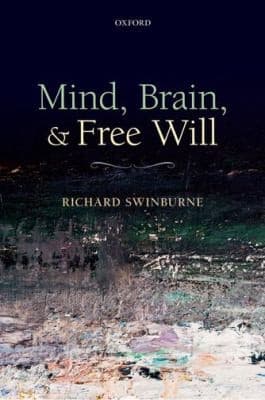
Mind, Brain, and Free Will
العقل والدماغ والإرادة الحرة
Esprit, Cerveau et Libre Arbitre
Editorial summary
This monograph represents Swinburne's systematic defense of substance dualism and libertarian free will against the prevailing physicalist consensus in philosophy of mind. The work advances a neo-Cartesian position that mental properties are irreducible to physical properties, arguing that conscious states and intentional actions cannot be fully explained through neuroscientific reduction. Swinburne develops his argument through careful analysis of mental causation, personal identity, and the phenomenology of choice.
The text engages critically with contemporary physicalist theories, particularly those of Daniel Dennett, Paul Churchland, and various functionalist accounts of mind. Swinburne contends that physicalism fails to account for the qualitative nature of conscious experience and the genuine causal efficacy of mental states. His argument proceeds through detailed examination of neuroscientific evidence, which he interprets as compatible with, rather than supportive of, dualist interaction. The work particularly emphasizes the inadequacy of physical descriptions to capture first-person subjective experience and the reality of agent causation.
Central to Swinburne's project is his defense of libertarian free will as requiring genuine alternative possibilities and ultimate origination. He argues that deterministic or compatibilist accounts cannot preserve moral responsibility in any meaningful sense. The text develops a sophisticated account of how immaterial mental substances can interact with physical brain states without violating conservation laws, drawing on quantum mechanical indeterminacy and emergent causation.
The monograph's significance extends beyond philosophy of mind to natural theology, as Swinburne argues that the existence of conscious, free agents provides evidence for theism. He contends that the emergence of consciousness and libertarian agency is more probable given theism than naturalism, since God would have reason to create beings capable of genuine choice and moral responsibility. This argument connects his philosophy of mind to his broader cumulative case for theism developed across his career.
The work contributes to contemporary debates by offering one of the most rigorous recent defenses of substance dualism, challenging the methodological naturalism that dominates current philosophy of mind. Swinburne's integration of phenomenological analysis, conceptual argumentation, and engagement with empirical neuroscience provides a comprehensive challenge to physicalist orthodoxy. His emphasis on the explanatory limits of neuroscience and the irreducibility of first-person experience positions the work as a significant intervention in ongoing debates about consciousness, free will, and the relationship between mind and brain.
Argument formulations engaged
Related works
Swinburne, Richard (2013). Mind, Brain, and Free Will. Oxford University Press.
@book{mind-brain-and-free-will-2013,
  author    = {Swinburne, Richard},
  title     = {Mind, Brain, and Free Will},
  year      = {2013},
  publisher = {Oxford University Press},
  url       = {https://god-database.com/en/works/mind-brain-and-free-will-2013}
}