
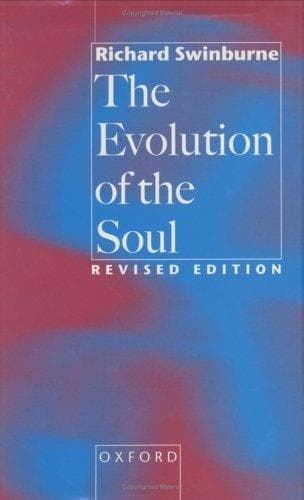
The Evolution of the Soul
تطور الروح
L'Évolution de l'âme
Editorial summary
This monograph presents a systematic defense of substance dualism, arguing that human beings possess immaterial souls in addition to physical bodies. Swinburne develops his case through careful analysis of mental phenomena that resist physicalist explanation, particularly consciousness, intentionality, and personal identity through time.
The work begins by examining the irreducibility of mental properties to physical states. Swinburne argues that sensations, thoughts, and purposes exhibit characteristics fundamentally different from brain states or behavioral dispositions. He contends that the qualitative nature of conscious experience cannot be captured by any amount of physical description, reviving and refining traditional arguments about the explanatory gap between objective physical facts and subjective mental life.
Central to Swinburne's argument is his treatment of personal identity. He maintains that neither bodily continuity nor psychological continuity theories adequately explain what makes a person the same individual across time. Through thought experiments involving brain transplants and gradual replacement scenarios, he argues that personal identity requires an immaterial soul as the bearer of continuous existence. This soul, while naturally connected to a particular body, can logically exist independently of any physical substrate.
The work engages extensively with contemporary materialist philosophy of mind, responding to functionalist and identity theory accounts. Swinburne critiques these positions for failing to accommodate the unity of consciousness and the privileged access individuals have to their own mental states. He also addresses evolutionary objections, arguing that while natural selection can explain behavioral capacities, it cannot account for the emergence of subjective experience itself.
In later chapters, Swinburne explores the soul's origin and destiny, connecting his philosophical arguments to theological questions. He argues that souls require special divine creation rather than emerging through purely natural processes. This leads to discussion of post-mortem survival, where he contends that the soul's potential independence from the body makes life after death coherent and plausible.
The monograph represents a significant contribution to the God debate by providing philosophical grounds for key religious doctrines about human nature and the afterlife. Swinburne's rigorous analytical approach demonstrates how traditional Christian beliefs about the soul can be defended using contemporary philosophical methods. His arguments challenge naturalistic worldviews that exclude non-physical substances, thereby supporting a theistic metaphysics that includes both God and created immaterial souls. The work remains influential in philosophy of mind and philosophical theology, offering sophisticated responses to physicalist assumptions dominant in modern thought.
Argument formulations engaged
Related works
Swinburne, Richard (1986). The Evolution of the Soul. Oxford University Press.
@book{the-evolution-of-the-soul-1986,
  author    = {Swinburne, Richard},
  title     = {The Evolution of the Soul},
  year      = {1986},
  publisher = {Oxford University Press},
  url       = {https://god-database.com/en/works/the-evolution-of-the-soul-1986}
}