
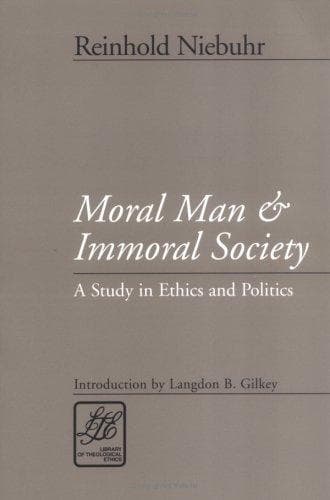
Moral Man and Immoral Society
الإنسان الأخلاقي والمجتمع اللاأخلاقي
L'homme moral et la société immorale
Editorial summary
Reinhold Niebuhr's "Moral Man and Immoral Society" presents a penetrating analysis of the relationship between individual morality and collective behavior, with significant implications for theological and ethical discourse about human nature and divine justice. Writing during the Depression era, Niebuhr challenges both liberal Protestant optimism and secular progressive confidence in human perfectibility, arguing that groups consistently behave more selfishly and ruthlessly than individuals.
The work develops a theological anthropology that acknowledges human sinfulness while maintaining the necessity of pursuing justice. Niebuhr contends that individuals may achieve genuine altruism through personal relationships and religious commitment, but collective entities—nations, races, and economic classes—remain fundamentally self-interested. This disparity emerges because group behavior lacks the moral constraints of individual conscience and face-to-face accountability. The author employs sociological analysis alongside theological reflection, examining how power operates in political and economic structures to perpetuate injustice despite individual good intentions.
Central to Niebuhr's argument is his critique of the Social Gospel movement's confidence that love and moral suasion alone can transform society. He insists that achieving relative justice requires recognizing the role of power and even coercion in restraining collective selfishness. This position challenges both religious idealists who expect the Kingdom of God to emerge through gradual moral progress and secular thinkers who place unlimited faith in reason and education. Niebuhr's "Christian realism" acknowledges the tragic dimensions of human existence while maintaining that prophetic religion provides essential resources for confronting social evil.
The work's theological significance lies in its sophisticated treatment of original sin as a social and political reality, not merely individual failing. Niebuhr argues that recognition of humanity's fallen nature paradoxically enables more effective pursuit of justice by tempering utopian expectations while sustaining hope through faith. His analysis influences subsequent discussions about divine providence, human agency, and the relationship between religious faith and political action. The text establishes key themes in twentieth-century theology: the limits of human goodness, the ambiguities of historical progress, and the necessity of divine grace for both personal redemption and social transformation. Niebuhr's synthesis of theological insight with social analysis provides a framework for understanding how religious commitment relates to collective human behavior and the persistent realities of power and conflict.
Argument formulations engaged
Related works
Niebuhr, Reinhold (1932). Moral Man and Immoral Society.
@book{moral-man-and-immoral-society-1932,
  author    = {Niebuhr, Reinhold},
  title     = {Moral Man and Immoral Society},
  year      = {1932},
  url       = {https://god-database.com/en/works/moral-man-and-immoral-society-1932}
}