
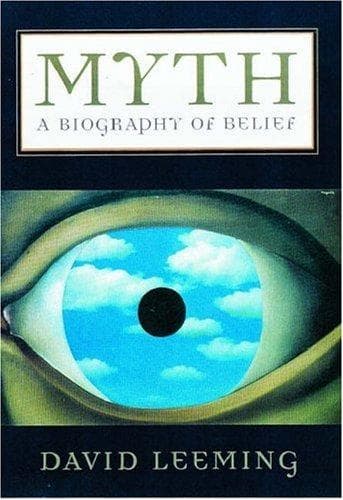
Myth.. A Biography of Belief
الأسطورة.. سيرة الاعتقاد
Le mythe.. Une biographie de la croyance
Myth, understood as a universal human biography of belief, reflects the deep structures through which all cultures have sought to make sense of existence, the sacred, and the divine.
Editorial summary
This volume examines the universal phenomenon of myth through a comprehensive intellectual history approach, tracing mythological narratives from prehistoric times to contemporary manifestations. Leeming presents myth not as primitive falsehood but as a fundamental mode of human meaning-making that reveals deep structures of belief across cultures. The work engages with the general theism debate by analyzing how mythological thinking shapes and reflects humanity's understanding of divine reality, cosmic order, and ultimate meaning.
The author employs a biographical framework to chart myth's evolution through distinct life stages: birth in prehistoric consciousness, childhood in ancient civilizations, adolescence in axial age transformations, and maturity in modern reinterpretations. This developmental narrative allows Leeming to demonstrate how mythological patterns persist even as their explicit religious content transforms or secularizes. He draws extensively from comparative mythology, depth psychology, and religious studies to show how creation stories, hero journeys, and apocalyptic visions recur across disparate traditions.
Central to Leeming's analysis is the argument that myth functions as humanity's primary tool for articulating relationships with transcendence, whether conceived as gods, cosmic principles, or psychological archetypes. He engages critically with both literalist religious interpretations that treat myths as historical facts and reductionist secular approaches that dismiss them as mere superstition. Instead, he positions myth as a symbolic language that mediates between human experience and ineffable reality, neither requiring nor precluding traditional theistic belief.
The work contributes significantly to contemporary debates about religion's role in human culture by demonstrating how mythological thinking adapts to scientific worldviews rather than simply opposing them. Leeming shows how modern narratives in literature, film, and even scientific cosmology continue mythological patterns, suggesting that the mythmaking impulse transcends specific religious commitments. His analysis challenges both religious fundamentalists who literalize myth and secular critics who fail to recognize its ongoing psychological and social functions.
The monograph's importance lies in reframing the God debate beyond simple theism versus atheism binaries. By revealing myth's persistence across secular and religious contexts, Leeming suggests that questions about ultimate reality and meaning remain constitutive of human consciousness regardless of explicit theological positions. This work provides essential context for understanding how contemporary discussions about God emerge from and transform ancient mythological substrates.
Structured analysis
Structure of the work
Argument formulations engaged
Leeming, David (2002). Myth.. A Biography of Belief.
@book{myth-a-biography-of-belief,
  author    = {Leeming, David},
  title     = {Myth.. A Biography of Belief},
  year      = {2002},
  url       = {https://god-database.com/en/works/myth-a-biography-of-belief}
}