
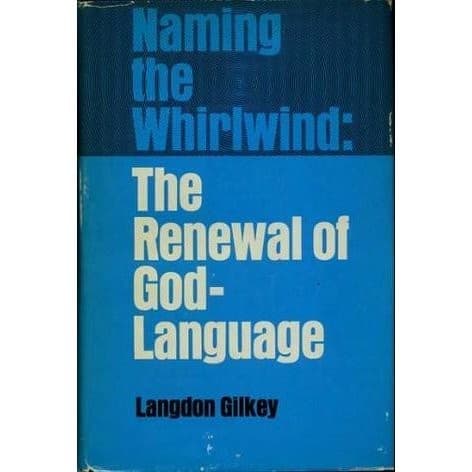
Naming the Whirlwind: The Renewal of God-Language
تسمية الإعصار: تجديد لغة الله
Nommer le Tourbillon : Le Renouveau du Langage sur Dieu
Editorial summary
This monograph represents Langdon Gilkey's systematic attempt to reconstruct religious language in response to the radical theological movements of the 1960s. Writing against both the "death of God" theologians and classical theistic frameworks, Gilkey develops a sophisticated hermeneutical approach that seeks to preserve meaningful God-talk within the context of secular modernity. His central argument contends that while traditional metaphysical language about God has indeed become problematic, the dimension of ultimacy in human experience continues to demand theological articulation.
Gilkey's method combines existential analysis with process thought and phenomenology. He begins by examining the "secular mood" that renders conventional religious discourse implausible to modern consciousness. Rather than abandoning theological language altogether, as radical theologians like Thomas Altizer and William Hamilton propose, Gilkey argues for its transformation through careful attention to limit situations and experiences of radical contingency. Drawing extensively on Paul Tillich while moving beyond him, Gilkey locates God-language in the correlation between ultimate questions arising from human existence and symbols that illuminate these depths.
The work's philosophical sophistication appears in its engagement with Whitehead's process metaphysics and Heidegger's ontology. Gilkey argues that God-language must abandon static categories of divine immutability in favor of dynamic, relational concepts that honor both transcendence and immanence. His critique of classical theism's substantialist categories proves particularly incisive, demonstrating how such language fails to address contemporary experiences of historicity and change.
Central to Gilkey's contribution is his notion of "naming the whirlwind" - finding adequate symbols for the sacred dimension within secular experience itself. He rejects both supernaturalist interventionism and reductionist naturalism, proposing instead a theology of culture that discerns ultimacy within the temporal process. This approach influences his treatment of providence, which he reconceives not as divine control but as the creative presence enabling human freedom and responsibility.
The monograph's enduring significance lies in its mediating position between radical theology's dissolution of God-language and neo-orthodox reassertions of traditional categories. Gilkey's careful phenomenology of secular experience, combined with his constructive theological proposals, establishes a framework for religious discourse that acknowledges modernity's challenges while maintaining theology's distinctive voice. His influence extends through subsequent developments in process theology, hermeneutical theology, and postliberal thought.
Argument formulations engaged
Related works
Gilkey, Langdon (1969). Naming the Whirlwind: The Renewal of God-Language.
@book{naming-the-whirlwind-the-renewal-of-god-,
  author    = {Gilkey, Langdon},
  title     = {Naming the Whirlwind: The Renewal of God-Language},
  year      = {1969},
  url       = {https://god-database.com/en/works/naming-the-whirlwind-the-renewal-of-god-language-1969}
}