
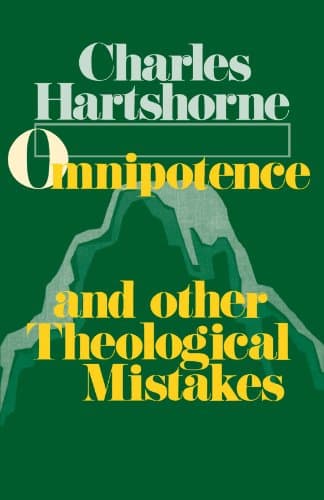
Omnipotence and Other Theological Mistakes
القدرة المطلقة وأخطاء لاهوتية أخرى
Omnipotence et Autres Erreurs Théologiques
Editorial summary
This monograph presents Hartshorne's systematic critique of classical theism, arguing that traditional conceptions of divine attributes contain logical contradictions that have undermined rational theology for centuries. Drawing on his process philosophy framework, Hartshorne identifies six fundamental "mistakes" in conventional theological thinking: divine omnipotence, divine omniscience as complete foreknowledge, divine immutability, the asymmetrical relationship between God and creation, the notion of creation ex nihilo, and the problem of evil as traditionally formulated.
The work's central contribution lies in its reformulation of divine attributes through a dipolar theism that distinguishes between God's abstract essence and concrete actuality. Hartshorne argues that classical omnipotence, understood as the ability to determine all events unilaterally, is logically incoherent and ethically problematic. Instead, he proposes that divine power operates persuasively rather than coercively, necessarily limited by the genuine freedom of creatures. This limitation represents not a deficiency but a logical requirement of any coherent concept of power in a world containing multiple agents.
Regarding omniscience, Hartshorne maintains that God knows all that is knowable, but future contingent events are inherently unknowable as determinate realities. God possesses perfect knowledge of all possibilities and probabilities without predetermined knowledge of which possibilities will be actualized by free creatures. This position preserves both divine perfection and creaturely freedom while avoiding the deterministic implications of classical foreknowledge.
The text engages critically with both Thomistic and Protestant orthodox traditions, demonstrating how their shared commitment to divine immutability and impassibility creates insurmountable philosophical problems. Hartshorne's alternative vision presents God as supremely related to and affected by creation, experiencing genuine temporality while maintaining necessary existence and perfect responsiveness to all events.
Philosophically, the work advances a metaphysical framework wherein God represents the supreme exemplification rather than the exception to metaphysical categories. This approach challenges the via negativa tradition and establishes theology on principles continuous with general philosophical reasoning. The monograph's significance extends beyond process theology circles, influencing contemporary debates in analytic philosophy of religion regarding divine temporality, the coherence of classical theism, and the logical status of divine attributes. Its arguments have prompted responses from both defenders of classical theism and proponents of alternative models, establishing essential parameters for subsequent theological discourse on divine perfection.
Argument formulations engaged
Related works
Hartshorne, Charles (1984). Omnipotence and Other Theological Mistakes.
@book{omnipotence-and-other-theological-mistak,
  author    = {Hartshorne, Charles},
  title     = {Omnipotence and Other Theological Mistakes},
  year      = {1984},
  url       = {https://god-database.com/en/works/omnipotence-and-other-theological-mistakes-1984}
}