
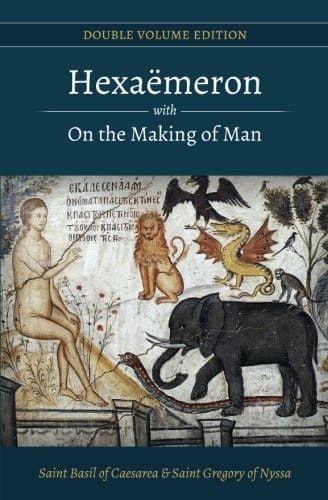
On the Making of Man
في خلق الإنسان
De la création de l'homme
Editorial summary
This treatise represents Gregory of Nyssa's systematic exploration of theological anthropology, examining the divine image in humanity and its implications for understanding both God and human nature. Written as a supplement to his brother Basil's Hexaemeron, the work addresses fundamental questions about human creation, the relationship between body and soul, and humanity's unique position within the cosmic order.
Gregory develops a sophisticated account of the imago Dei that emphasizes human rationality, freedom, and capacity for virtue as reflections of divine attributes. He argues that humanity serves as a microcosm uniting the material and spiritual realms, possessing both bodily existence and intellectual faculties that mirror divine intelligence. This anthropological vision supports his broader theological project by demonstrating how human nature itself provides evidence for God's existence and character. The divine image, though obscured by sin, remains fundamental to human nature and grounds humanity's potential for deification through divine grace.
The work engages critically with contemporary philosophical positions, particularly Origenist pre-existence theories and Apollinarian christological reductionism. Against Origen's notion of pre-existent souls, Gregory maintains the simultaneous creation of body and soul, preserving human unity. His refutation of Apollinarius defends the completeness of Christ's human nature, including rational soul, which proves essential for salvation. Gregory synthesizes Platonic philosophical categories with biblical revelation, demonstrating how Christian theology can appropriate philosophical insights while transforming them through scriptural principles.
Methodologically, Gregory combines scriptural exegesis with philosophical argumentation, drawing on medical and scientific knowledge of his era to support theological claims. His approach reflects the Cappadocian commitment to engaging secular learning in service of Christian truth. The treatise's influence extends through Eastern Christian tradition, shaping subsequent Byzantine anthropology and mystical theology.
The work's significance for the God debate lies in its demonstration that human nature itself constitutes an argument for divine existence and providence. Gregory's analysis suggests that proper understanding of human dignity, rationality, and moral capacity necessarily points toward a divine creator whose image humanity bears. This anthropological approach to natural theology offers a distinctive contribution to patristic arguments for God's existence, grounding theological claims in reflection on human experience and nature rather than purely cosmological considerations.
Argument formulations engaged
Related works
Nyssa, Gregory of (379). On the Making of Man. Aeterna Press.
@book{on-the-making-of-man-379,
  author    = {Nyssa, Gregory of},
  title     = {On the Making of Man},
  year      = {379},
  publisher = {Aeterna Press},
  url       = {https://god-database.com/en/works/on-the-making-of-man-379}
}