
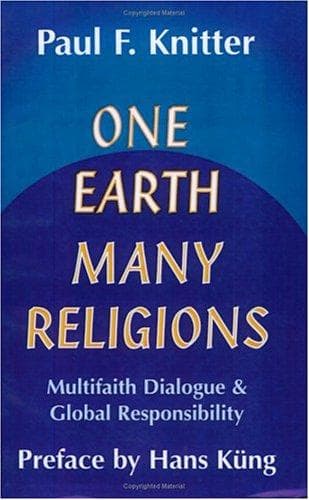
One Earth Many Religions: Multifaith Dialogue and Global Responsibility
أرض واحدة أديان متعددة: الحوار متعدد الأديان والمسؤولية العالمية
Une Terre, plusieurs religions : Dialogue interreligieux et responsabilité mondiale
Editorial summary
This work represents a pivotal contribution to interreligious dialogue by establishing an ethical foundation for multifaith cooperation centered on global ecological and social crises. Knitter argues that traditional approaches to religious pluralism have reached an impasse, proposing instead a "globally responsible" model that prioritizes shared ethical action over theological consensus. His central thesis contends that religions can and must collaborate on pressing planetary concerns without resolving metaphysical disagreements about ultimate reality or divine nature.
The monograph develops through three interconnected movements. First, Knitter critiques existing pluralist theologies, particularly those of John Hick and his own earlier work, for their emphasis on finding common ground through abstract theological principles. He demonstrates how such approaches inevitably privilege certain religious worldviews while marginalizing others, particularly non-theistic traditions. Second, he proposes a "soteriocentric" approach that shifts focus from theocentrism to liberation and well-being, drawing heavily on liberation theology's methodological insights. This move allows diverse religious communities to unite around concrete practices of eco-justice without requiring agreement about God's existence or nature. Third, he outlines practical strategies for implementing this vision through what he terms "globally responsible dialogue."
Knitter's methodology combines comparative theology with ethical philosophy and environmental studies. He engages extensively with Buddhist-Christian dialogue, Latin American liberation theology, and feminist religious thought to construct his argument. His intellectual framework draws particularly on the pragmatism of William James and John Dewey, emphasizing religious truth as primarily practical rather than propositional. This pragmatic orientation enables him to sidestep traditional apologetic debates about competing truth claims while maintaining religious commitment's integrity.
The work's significance lies in its reframing of religious plurality as an asset rather than obstacle for addressing global crises. By grounding interreligious cooperation in shared ethical responsibility rather than theological agreement, Knitter opens new possibilities for religious communities to collaborate on climate change, economic justice, and human rights. His proposal challenges both exclusivist positions that deny other religions' validity and inclusivist approaches that subsume religious differences under singular frameworks. While some critics argue his approach reduces religion to ethics, Knitter maintains that globally responsible action represents authentic religious expression across traditions. The monograph thus marks a crucial shift in religious studies from abstract theological comparison to concrete ethical engagement.
Argument formulations engaged
Knitter, Paul (1995). One Earth Many Religions: Multifaith Dialogue and Global Responsibility.
@book{one-earth-many-religions-multifaith-dial,
  author    = {Knitter, Paul},
  title     = {One Earth Many Religions: Multifaith Dialogue and Global Responsibility},
  year      = {1995},
  url       = {https://god-database.com/en/works/one-earth-many-religions-multifaith-dialogue-and-global-responsibility-1995}
}