
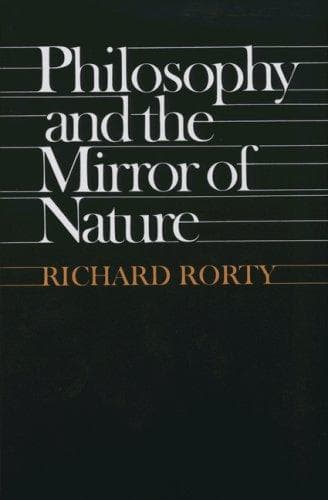
Philosophy and the Mirror of Nature
الفلسفة ومرآة الطبيعة
Philosophie et le miroir de la nature
Editorial summary
This groundbreaking work fundamentally challenges the epistemological foundations that have shaped Western philosophy since the Enlightenment, with profound implications for how philosophical discourse approaches questions about God, truth, and human knowledge. Richard Rorty argues that philosophy has been dominated by the false metaphor of the mind as a mirror that accurately reflects reality, a conception he traces through Descartes, Locke, and Kant. This "representationalist" view assumes that knowledge consists in forming accurate mental representations of an external world, including potential truths about divine reality.
Rorty's critique draws heavily on the later Wittgenstein, Heidegger, and Dewey to dismantle the notion that philosophy can serve as a foundational discipline that adjudicates all knowledge claims. He contends that the traditional epistemological project, which seeks certain foundations for belief, represents a historical contingency rather than a perennial human concern. This position has significant ramifications for natural theology and religious epistemology, as it undermines attempts to establish rational proofs for God's existence or to ground religious belief in indubitable foundations.
The work advocates for a "post-philosophical" culture where conversation replaces confrontation with eternal questions. Rorty proposes hermeneutics over epistemology, emphasizing interpretation and dialogue rather than the search for objective truth. This shift reframes religious discourse from debates about the truth of theistic claims to discussions about the role such vocabularies play in human life and culture. Traditional philosophical arguments about God's existence become seen as products of an outdated representationalist paradigm rather than genuine intellectual problems requiring solution.
Rorty's neo-pragmatist approach suggests that religious and secular worldviews should be evaluated by their consequences for human flourishing rather than their correspondence to reality. This perspective neither affirms nor denies God's existence but rather deflates the significance of the question itself. The work thus contributes to the God debate by attempting to dissolve rather than resolve it, positioning religious belief as one vocabulary among many for coping with human existence. His influence extends across philosophy of religion, where scholars must now grapple with whether theological questions can survive the collapse of foundationalist epistemology that Rorty diagnoses and celebrates.
Argument formulations engaged
Related works
Rorty, Richard (1979). Philosophy and the Mirror of Nature.
@book{philosophy-and-the-mirror-of-nature-1979,
  author    = {Rorty, Richard},
  title     = {Philosophy and the Mirror of Nature},
  year      = {1979},
  url       = {https://god-database.com/en/works/philosophy-and-the-mirror-of-nature-1979}
}