
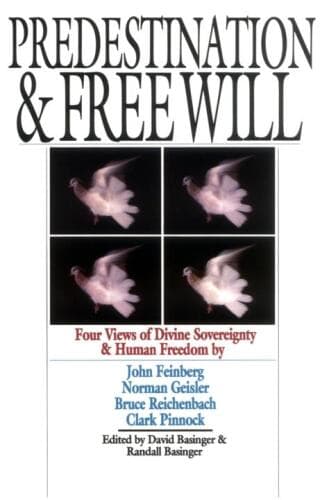
Predestination & Free Will: Four Views of Divine Sovereignty and Human Freedom
القدر والإرادة الحرة: أربع وجهات نظر حول السيادة الإلهية والحرية الإنسانية
Prédestination et libre arbitre : Quatre perspectives sur la souveraineté divine et la liberté humaine
Editorial summary
This volume presents four major theological perspectives on the relationship between divine sovereignty and human freedom, addressing one of Christianity's most enduring debates. The editor brings together representatives of distinct traditions to articulate their positions on predestination, election, and the nature of human agency within God's providential governance.
The work features systematic presentations from Reformed, moderate Calvinist, Arminian, and modified Lutheran viewpoints. Each contributor develops their position through careful biblical exegesis, theological argumentation, and historical analysis, while responding to alternative interpretations. The Reformed position typically emphasizes God's absolute sovereignty and unconditional election, arguing that human freedom operates within divinely predetermined bounds. The Arminian perspective counters by asserting genuine libertarian free will and conditional election based on foreseen faith. Moderate positions attempt various syntheses, seeking to preserve both divine sovereignty and meaningful human choice.
The volume's significance lies in its structured dialogue format, which allows readers to compare competing hermeneutical approaches and theological frameworks directly. Contributors engage specific biblical texts that have historically divided theologians, including Romans 9, Ephesians 1, and various Gospel passages addressing human responsibility and divine calling. The work illuminates how different starting assumptions about God's nature, human anthropology, and the mechanics of salvation lead to divergent theological systems.
Methodologically, the book combines biblical theology, systematic theology, and historical theology. Each author traces their position's development through church history, engaging patristic sources, medieval scholasticism, Reformation debates, and contemporary discussions. This historical consciousness demonstrates how these questions have persistently shaped Christian thought about God's character and relationship to creation.
The volume contributes to the God debate by examining how different conceptions of divine action impact theological anthropology, theodicy, and pastoral practice. The predestination debate ultimately concerns God's justice, love, and power - whether divine sovereignty necessarily compromises human responsibility, or whether human freedom limits God's providential control. These questions bear directly on how believers understand prayer, evangelism, moral accountability, and the problem of evil. By presenting these positions in direct conversation, the work enables readers to assess the coherence, biblical fidelity, and explanatory power of each theological framework.
Argument formulations engaged
Related works
Gundry, Stanley N. (1986). Predestination & Free Will: Four Views of Divine Sovereignty and Human Freedom. InterVarsity Press.
@book{predestination-free-will-four-views-of-d,
  author    = {Gundry, Stanley N.},
  title     = {Predestination & Free Will: Four Views of Divine Sovereignty and Human Freedom},
  year      = {1986},
  publisher = {InterVarsity Press},
  url       = {https://god-database.com/en/works/predestination-free-will-four-views-of-divine-sovereignty-and-human-freedom-1986}
}