
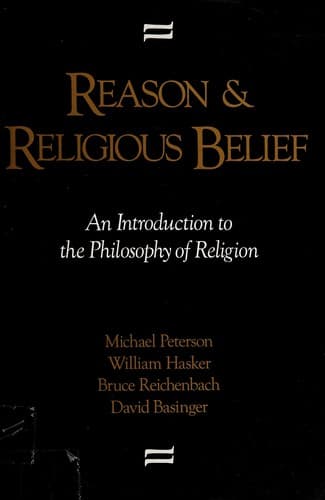
Reason and Religious Belief: An Introduction to the Philosophy of Religion
العقل والاعتقاد الديني: مقدمة لفلسفة الدين
Raison et croyance religieuse : Une introduction à la philosophie de la religion
Editorial summary
This introductory textbook systematically examines philosophical approaches to religious belief, with particular attention to contemporary debates about divine attributes, religious epistemology, and the problem of evil. Basinger structures the work to provide students with a comprehensive survey of how philosophers analyze religious claims, focusing primarily on Western theistic traditions while incorporating comparative perspectives from other religious traditions.
The text explores classical arguments for God's existence, including cosmological, teleological, and ontological arguments, presenting both historical formulations and modern revisions. Basinger carefully examines counter-arguments and rejoinders, demonstrating how philosophical discourse about God has evolved through critical dialogue. The treatment of divine attributes addresses traditional puzzles about omnipotence, omniscience, and perfect goodness, including paradoxes of divine foreknowledge and human freedom. Rather than advocating particular solutions, Basinger maps the philosophical terrain, showing how different theoretical commitments lead to divergent conclusions about divine nature.
Significant attention focuses on religious epistemology, examining whether religious belief requires evidential support or can be properly basic. The text engages debates between evidentialists and reformed epistemologists, exploring how different theories of knowledge and justification apply to religious claims. Basinger addresses the challenge of religious diversity, considering how the existence of multiple religious traditions affects the rationality of exclusive truth claims.
The problem of evil receives extended treatment, with Basinger presenting various theodicies alongside skeptical challenges. The text examines logical and evidential formulations of the problem, free will defenses, soul-making theodicies, and skeptical theist responses. Throughout, Basinger maintains philosophical neutrality while ensuring arguments on all sides receive fair representation.
The work's contribution to philosophy of religion lies in its balanced presentation of live philosophical debates rather than historical surveys. By focusing on argument analysis and conceptual clarity, Basinger equips readers to engage critically with religious claims. The text demonstrates how philosophical tools apply to religious questions without presuming answers, making it valuable for students approaching these issues from diverse perspectives. Its emphasis on analytical rigor combined with sensitivity to religious phenomena establishes a model for philosophical engagement with religious belief that neither dismisses nor uncritically accepts religious claims.
Argument formulations engaged
Related works
Basinger, David (1991). Reason and Religious Belief: An Introduction to the Philosophy of Religion. Oxford University Press.
@book{reason-and-religious-belief-an-introduct,
  author    = {Basinger, David},
  title     = {Reason and Religious Belief: An Introduction to the Philosophy of Religion},
  year      = {1991},
  publisher = {Oxford University Press},
  url       = {https://god-database.com/en/works/reason-and-religious-belief-an-introduction-to-the-philosophy-of-religion-1991}
}