
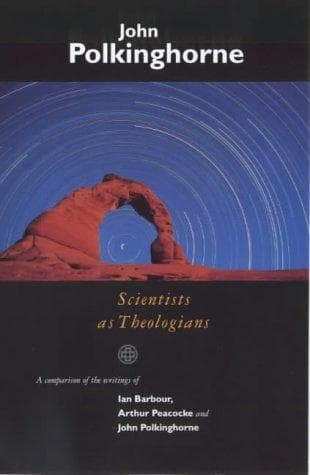
Scientists as Theologians
العلماء كعلماء لاهوت
Scientifiques comme théologiens
Editorial summary
This work examines the theological implications of modern scientific understanding, arguing that scientific insights can inform and enrich theological reflection. Polkinghorne, a theoretical physicist turned Anglican priest, contends that scientists who engage with ultimate questions naturally move into theological territory, and that their scientific training provides valuable perspectives for this endeavor.
The book develops a sustained argument for natural theology, proposing that the rational intelligibility and fine-tuning of the universe point toward divine purpose. Polkinghorne maintains that science's success in uncovering mathematical patterns in nature suggests a Mind behind physical reality. He particularly emphasizes how quantum mechanics and chaos theory have transformed mechanistic worldviews, creating conceptual space for divine action without violating natural laws. The author argues that God acts through the inherent openness of physical processes rather than through supernatural intervention.
Central to Polkinghorne's approach is the claim that science and theology share methodological similarities as truth-seeking disciplines. Both rely on inference to the best explanation, both require personal judgment in weighing evidence, and both involve communities testing and refining understanding over time. He rejects both scientific materialism and biblical literalism, advocating instead for critical realism in both domains. This framework allows him to address traditional theological topics like creation, providence, and prayer through the lens of contemporary physics.
The work engages extensively with the science-religion dialogue movement, drawing on figures like Ian Barbour and Arthur Peacocke while critiquing reductionist approaches from Richard Dawkins and others. Polkinghorne argues against Stephen Jay Gould's proposal of non-overlapping magisteria, insisting that science and theology must interact because they address the same reality from different perspectives. He develops a "consonance" model where scientific and theological insights mutually illuminate without determining each other.
The book's significance lies in its sophisticated attempt to demonstrate how scientific practice can lead to theological reflection rather than atheism. By showing how prominent scientists throughout history have found their research pointing toward transcendent questions, Polkinghorne challenges the assumption that scientific advancement inevitably erodes religious belief. His dual expertise allows him to navigate technical scientific concepts while addressing classical theological concerns, making a distinctive contribution to natural theology that takes modern physics seriously. The work represents an important example of constructive dialogue between science and theology from someone with advanced credentials in both fields.
Argument formulations engaged
Related works
Polkinghorne, John C. (1996). Scientists as Theologians. SPCK.
@book{scientists-as-theologians-1996,
  author    = {Polkinghorne, John C.},
  title     = {Scientists as Theologians},
  year      = {1996},
  publisher = {SPCK},
  url       = {https://god-database.com/en/works/scientists-as-theologians-1996}
}