
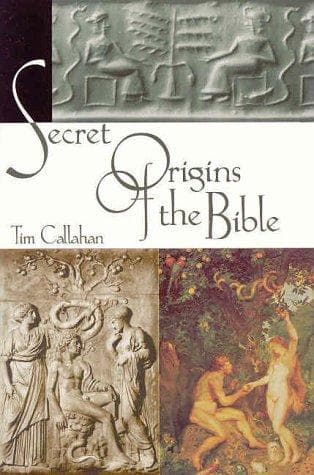
Secret Origins of the Bible
الأصول الخفية للكتاب المقدس
Les origines secrètes de la Bible
The biblical texts are best understood not as divine revelation but as literary and religious compositions shaped by older Near Eastern mythologies, oral traditions, and cultural borrowings.
Editorial summary
This volume examines the compositional history of biblical texts through comparative mythology and literary analysis, arguing that the Hebrew Bible emerges from a complex amalgamation of ancient Near Eastern sources rather than divine revelation. Callahan employs textual criticism and comparative methodologies to trace biblical narratives, laws, and prophecies to their antecedents in Mesopotamian, Egyptian, and Canaanite literature.
The work systematically deconstructs claims of biblical uniqueness by demonstrating extensive borrowing and adaptation from earlier traditions. Callahan analyzes creation accounts, flood narratives, law codes, and wisdom literature, showing how biblical authors transformed existing materials to serve new theological and political purposes. His treatment of Genesis particularly emphasizes parallels with the Enuma Elish and Epic of Gilgamesh, while his analysis of Mosaic law highlights dependencies on the Code of Hammurabi and other ancient legal collections.
Central to Callahan's argument is his critique of prophetic claims, which he situates within the broader ancient Near Eastern practice of ex eventu prophecy—predictions written after the events they purport to foretell. He examines how biblical prophecies function as retrospective theological interpretations rather than genuine predictions, thereby challenging traditional apologetic uses of prophecy as evidence for divine inspiration. The analysis extends to messianic prophecies, which Callahan argues represent later reinterpretations and creative readings of earlier texts.
The methodological approach combines source criticism with archaeological findings and comparative linguistics to reconstruct the sociopolitical contexts in which biblical texts emerged. Callahan particularly emphasizes the exilic and post-exilic periods as crucial for understanding the final redaction of many biblical books, arguing that traumatic historical experiences prompted creative theological responses that retroactively shaped earlier traditions.
This contribution to the secular-naturalist tradition provides accessible yet scholarly analysis for general readers seeking historical-critical perspectives on biblical origins. By demonstrating the human and culturally contingent nature of biblical composition, Callahan's work undermines literalist readings while offering naturalistic explanations for the development of biblical literature. His engagement with prophecy arguments specifically counters evangelical and fundamentalist claims about predictive prophecy as validation of divine authorship, instead presenting these texts as products of human literary and religious creativity responding to historical circumstances.
Structured analysis
Structure of the work
Argument formulations engaged
Related works
Callahan, Tim (2002). Secret Origins of the Bible.
@book{secret-origins-of-the-bible,
  author    = {Callahan, Tim},
  title     = {Secret Origins of the Bible},
  year      = {2002},
  url       = {https://god-database.com/en/works/secret-origins-of-the-bible}
}