
Taking Morality Seriously
أخذ الأخلاق على محمل الجد
Prendre la moralité au sérieux
Editorial summary
This monograph presents a robust defense of moral realism through what Enoch terms "robust realism" - the view that there exist objective, mind-independent moral truths. The work directly challenges the dominant anti-realist positions in contemporary metaethics, particularly error theory, expressivism, and response-dependent theories. While not explicitly a work in philosophy of religion, the book makes significant contributions to debates about God by defending a view of morality that has traditionally been associated with theistic worldviews, though Enoch himself develops his position without relying on theological premises.
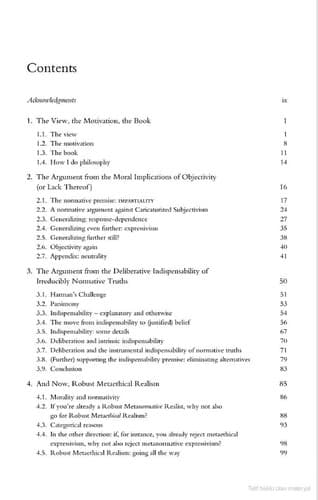
Enoch's central argumentative strategy revolves around what he calls the "deliberative indispensability" of morality. He argues that when we engage in genuine deliberation about what to do, we cannot help but treat moral considerations as objective truths rather than mere preferences or social constructions. This phenomenological observation serves as the foundation for a transcendental argument: since we cannot coherently engage in practical reasoning without presupposing moral objectivity, we are justified in believing that objective moral truths exist.
The work systematically addresses the most pressing objections to moral realism, including Mackie's argument from queerness and various evolutionary debunking arguments. Enoch acknowledges that moral properties would indeed be metaphysically "queer" compared to natural properties, but argues this gives us no reason to deny their existence if we have independent grounds for believing in them. Regarding evolutionary challenges, he develops a sophisticated response showing how moral beliefs could track objective moral truths even if our moral faculties evolved for non-truth-tracking purposes.
For the God debate, this work proves significant in several ways. First, it demonstrates that objective morality - often cited as evidence for theism - can be defended on purely secular grounds. This challenges both theistic arguments that claim God is necessary for objective morality and atheistic arguments that reject objective morality along with God. Second, Enoch's robust realism creates philosophical space for non-naturalist properties that share important features with traditional conceptions of the divine: necessity, mind-independence, and normative authority. While Enoch does not explore these theological implications, his defense of irreducibly normative properties challenges the naturalistic worldview often associated with atheism, suggesting that reality contains more than just physical entities and their arrangements.
Argument formulations engaged
Enoch, David (2011). Taking Morality Seriously. Oxford University Press, USA.
@book{taking-morality-seriously-2011,
  author    = {Enoch, David},
  title     = {Taking Morality Seriously},
  year      = {2011},
  publisher = {Oxford University Press, USA},
  url       = {https://god-database.com/en/works/taking-morality-seriously-2011}
}