
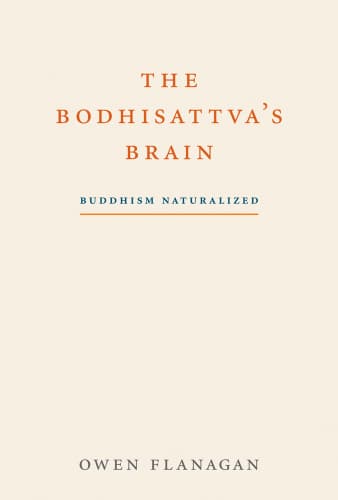
The Bodhisattva's Brain: Buddhism Naturalized
دماغ البوديساتفا: البوذية المؤنسنة
Le Cerveau du bodhisattva : Le bouddhisme naturalisé
Editorial summary
Owen Flanagan's The Bodhisattva's Brain: Buddhism Naturalized represents a significant philosophical intervention in both comparative philosophy and the contemporary debate about religious naturalism. The work examines whether Buddhism, particularly its ethical and meditative practices, can survive translation into a thoroughly naturalistic framework stripped of supernatural elements. This project directly engages the God debate by exploring whether meaningful spiritual practice and moral cultivation can exist without metaphysical commitments to transcendent realities, rebirth, or karmic causation.
Flanagan employs what he terms "comparative neurophilosophy," combining philosophical analysis with empirical findings from neuroscience and psychology to evaluate Buddhist claims about consciousness, well-being, and ethical development. His method involves identifying what he calls "Buddhism naturalized" - extracting the empirically supportable and philosophically defensible aspects of Buddhist practice from their traditional metaphysical framework. This approach positions the work against both traditional Buddhist philosophy, which maintains supernatural elements, and reductive materialism, which dismisses contemplative traditions entirely.
The monograph's central argument contends that Buddhism's valuable insights about human flourishing, particularly regarding the cultivation of compassion, mindfulness, and the diagnosis of suffering's causes, remain intact when divorced from beliefs in rebirth, karma as cosmic justice, or nirvana as a transcendent state. Flanagan demonstrates how neuroscientific research on meditation supports certain Buddhist claims about mental training while challenging others. He argues that this naturalized Buddhism offers resources for addressing existential questions traditionally answered by theistic religions without requiring belief in supernatural entities or processes.
This work contributes significantly to debates about religious naturalism and secular spirituality. By showing how a major world religion's practical wisdom can be preserved within a naturalistic worldview, Flanagan challenges both the assumption that meaningful spirituality requires supernatural beliefs and the notion that naturalism necessarily leads to nihilism or moral relativism. His analysis provides a model for how other religious traditions might be similarly naturalized, offering a middle path between traditional theism and eliminative materialism. The work thus speaks to those seeking spiritual depth without metaphysical commitments, while also engaging philosophers of religion interested in the relationship between religious practice and supernatural belief. Flanagan's project ultimately suggests that the most valuable aspects of religious life may be independent of beliefs about God or ultimate reality.
Argument formulations engaged
Flanagan, Owen (2011). The Bodhisattva's Brain: Buddhism Naturalized.
@book{the-bodhisattvas-brain-buddhism-naturali,
  author    = {Flanagan, Owen},
  title     = {The Bodhisattva's Brain: Buddhism Naturalized},
  year      = {2011},
  url       = {https://god-database.com/en/works/the-bodhisattvas-brain-buddhism-naturalized-2011}
}