
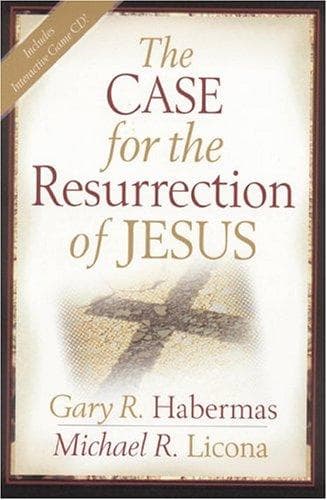
The Case for the Resurrection of Jesus
الحجة على قيامة يسوع
Les Arguments en faveur de la résurrection de Jésus
The resurrection of Jesus is the best historically supported explanation for a minimal set of facts accepted by the vast majority of critical scholars, making it a rational and evidentially grounded foundation for Christian belief.
Editorial summary
This monograph presents a comprehensive historical argument for the resurrection of Jesus Christ, employing critical historiographical methods to evaluate the evidence surrounding this foundational Christian claim. Habermas develops what he terms the "minimal facts approach," which focuses exclusively on data points that meet two criteria: they possess exceptionally strong historical attestation and enjoy widespread acceptance among scholars across the theological spectrum, including skeptical researchers.
The work identifies several core facts that satisfy these stringent criteria: Jesus died by crucifixion, his disciples experienced what they believed were post-mortem appearances, the early church emerged with resurrection as its central proclamation, key skeptics like Paul and James converted after experiencing what they understood as appearances of the risen Jesus, and the tomb was found empty. Habermas argues that the resurrection hypothesis provides the most coherent explanation for this constellation of accepted facts.
Methodologically, the text engages extensively with the criteria of authenticity developed in historical Jesus research, including multiple attestation, dissimilarity, and embarrassment. Habermas examines rival naturalistic hypotheses—hallucination theory, conspiracy theory, swoon theory, and others—demonstrating how each fails to account adequately for the minimal facts. The argument particularly emphasizes the conversion of hostile witnesses and the disciples' willingness to suffer for their testimony as factors requiring explanation.
The monograph situates itself within contemporary historical-critical scholarship while maintaining dialogue with philosophical considerations about miracles and historical methodology. Habermas addresses David Hume's influential argument against miracles, contending that the historical evidence must be evaluated on its own merits rather than dismissed through prior philosophical commitments. The work engages extensively with skeptical scholars like Gerd Lüdemann and Bart Ehrman, incorporating their concessions about certain historical data while challenging their alternative explanations.
This contribution advances the prophecy argument family by grounding supernatural claims in historical methodology rather than purely theological reasoning. The minimal facts approach represents a strategic innovation in resurrection apologetics, attempting to establish common ground with skeptical scholarship while building toward a supernatural conclusion. The work's influence extends beyond evangelical circles, prompting responses from historians, philosophers, and theologians across traditions who must grapple with its historically-focused argumentation and its implications for understanding early Christianity's emergence.
Argument formulations engaged
Related works
Habermas, Gary R. The Case for the Resurrection of Jesus. Kregel Publications.
@book{the-case-for-the-resurrection-of-jesus,
  author    = {Habermas, Gary R.},
  title     = {The Case for the Resurrection of Jesus},
  year      = {n.d.},
  publisher = {Kregel Publications},
  url       = {https://god-database.com/en/works/the-case-for-the-resurrection-of-jesus}
}