
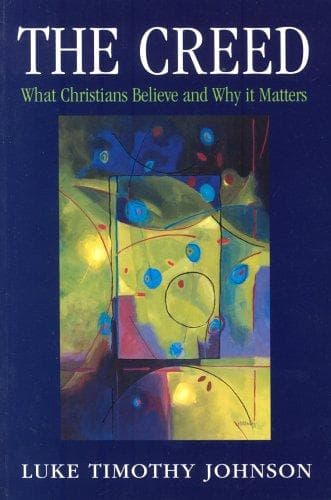
The Creed
العقيدة
Le Credo
Editorial summary
Johnson's monograph presents a sustained theological interpretation of the Nicene Creed, positioning this ancient formulation as essential for contemporary Christian faith and philosophical reflection on God. The work emerges within the context of modern biblical criticism and systematic theology, where Johnson, a New Testament scholar, bridges exegetical and dogmatic approaches to demonstrate the creed's continued relevance for understanding divine reality.
The author systematically examines each article of the Nicene Creed, arguing that its language captures fundamental truths about God's nature and relationship to creation that transcend their historical origins. Johnson contends that the creed's trinitarian structure provides not merely doctrinal propositions but a grammar for speaking coherently about transcendent reality. Against reductionist readings that would dismiss credal formulations as outdated metaphysics, he maintains that the creed articulates perennial insights about divine personhood, incarnation, and redemptive action.
Johnson's method combines historical analysis with constructive theology. He traces the development of credal language through early Christian controversies while simultaneously engaging contemporary philosophical questions about religious language, ontology, and epistemology. The work particularly addresses liberal Protestant scholars who view creeds as barriers to authentic faith, as well as fundamentalist interpreters who treat them as mere factual assertions. Johnson charts a middle course, presenting the creed as a living tradition that shapes Christian imagination and practice.
Central to Johnson's argument is his defense of the creed's metaphysical claims about God's being. He maintains that expressions like "God from God, Light from Light" convey genuine knowledge about divine reality rather than mere poetic imagery. The work engages critically with demythologizing approaches associated with Bultmann and his successors, arguing instead for the cognitive content of traditional theological language. Johnson demonstrates how the creed's paradoxical formulations about Christ's dual nature and the Trinity's unity-in-distinction offer sophisticated responses to perennial philosophical problems about the one and the many, transcendence and immanence.
The monograph's significance lies in its robust defense of classical Christian theism against both secular dismissals and theological revisions. Johnson shows how ancient credal formulations remain philosophically sophisticated and existentially meaningful for contemporary believers. His work contributes to ongoing debates about religious epistemology, the relationship between faith and reason, and the possibility of genuine theological knowledge in a pluralistic age.
Argument formulations engaged
Johnson, Luke Timothy (2003). The Creed. Aconyte.
@book{the-creed-2003,
  author    = {Johnson, Luke Timothy},
  title     = {The Creed},
  year      = {2003},
  publisher = {Aconyte},
  url       = {https://god-database.com/en/works/the-creed-2003}
}