
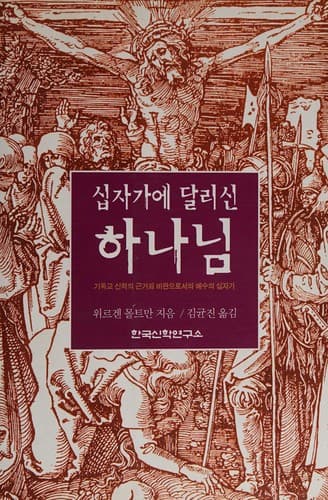
The Crucified God
الإله المصلوب
Le Dieu crucifié
Editorial summary
In The Crucified God, Jürgen Moltmann develops a radical reconstruction of Christian theology centered on the cross as the defining moment of divine self-revelation. Writing in the aftermath of Auschwitz and amid the political upheavals of the 1960s, Moltmann argues that traditional theism fails to address the problem of suffering because it maintains an abstract, impassible deity removed from human anguish. Against both classical metaphysical theology and modern atheistic critiques, he proposes understanding God through the lens of Christ's abandonment on the cross.
Moltmann's central thesis holds that the crucifixion reveals God's essential nature as suffering love. Drawing extensively on Luther's theology of the cross and engaging contemporary philosophers like Horkheimer and Adorno, he contends that God participates in human suffering not despite divine perfection but as its ultimate expression. The cry of dereliction represents not merely Christ's human experience but an event within the Trinity itself, where the Father experiences the loss of the Son through the Spirit. This trinitarian interpretation challenges both monotheistic simplicity and process theology's limitations on divine sovereignty.
The work directly confronts protest atheism's moral objections to belief in God after Auschwitz. Rather than defending divine providence through theodicy, Moltmann accepts the atheistic critique of an unmoved mover but responds by locating God within suffering itself. He argues that only a crucified God can address the moral revulsion against belief in an omnipotent deity who permits evil. This approach transforms the God question from speculative metaphysics to existential encounter with divine solidarity in abandonment.
Methodologically, Moltmann combines biblical exegesis, systematic theology, and cultural criticism. He reads scripture through the hermeneutics of political theology, connecting the cross to contemporary experiences of oppression and abandonment. His dialectical approach moves between divine transcendence and immanence, maintaining that God is simultaneously the wholly other and the one who enters most deeply into creaturely suffering.
The Crucified God significantly influenced liberation theology and contemporary trinitarian thought. By grounding theology in the paradox of divine suffering, Moltmann opens new possibilities for addressing theodicy while maintaining robust theistic commitments. His work demonstrates how the God question can be reconceived through the scandal of the cross rather than philosophical abstraction, offering a distinctly Christian response to modern atheism's moral critique.
Argument formulations engaged
Related works
Moltmann, Jürgen (1974). The Crucified God. FORTRESS PRESS.
@book{the-crucified-god-1974,
  author    = {Moltmann, Jürgen},
  title     = {The Crucified God},
  year      = {1974},
  publisher = {FORTRESS PRESS},
  url       = {https://god-database.com/en/works/the-crucified-god-1974}
}