
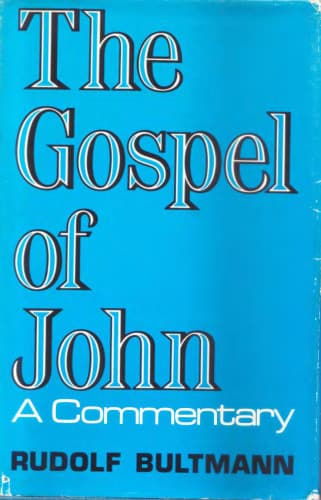
The Gospel of John: A Commentary
إنجيل يوحنا: تفسير
L'Évangile de Jean : Un commentaire
Editorial summary
This monumental commentary represents Rudolf Bultmann's culminating engagement with the Fourth Gospel, synthesizing decades of form-critical analysis with his distinctive program of demythologization. Bultmann approaches the Johannine text not as straightforward historical reportage but as a sophisticated theological interpretation that transforms earlier traditions through the lens of existentialist philosophy. His analysis systematically distinguishes between various sources underlying the gospel, including a hypothetical "signs source" and extensive discourse materials, while arguing that the evangelist radically reinterprets these materials to address the existential situation of human beings before God.
Central to Bultmann's reading is his conviction that John presents Jesus not as a figure to be understood through traditional Jewish messianic categories or Hellenistic divine-man concepts, but as the eschatological revealer who confronts humanity with the decisive choice between authentic and inauthentic existence. The commentary meticulously demonstrates how Johannine theology strips away mythological elements from earlier Christian tradition, presenting instead a radical theology of the word in which Jesus's significance lies not in miraculous deeds or metaphysical status but in his function as the one who brings the possibility of genuine self-understanding before God.
Bultmann's existentialist hermeneutic shapes his treatment of traditionally theistic passages, consistently interpreting supernatural claims about Jesus's preexistence, divine nature, and resurrection in terms of their significance for human decision rather than as metaphysical assertions. This approach proves particularly controversial in his handling of the prologue, where he argues that the logos concept functions not to establish ontological claims about Christ's deity but to articulate how the divine word addresses human existence in its fallenness and possibility.
The commentary's lasting influence on the God debate stems from its rigorous application of historical-critical methods combined with philosophical interpretation that attempts to preserve Christianity's existential truth while abandoning traditional theistic metaphysics. Bultmann's John emerges as a theological genius who anticipates modern concerns by presenting faith not as assent to supernatural propositions but as authentic response to the divine address. This reading profoundly challenges both conservative defenders of traditional christology and secular critics who dismiss religious language as meaningless, proposing instead that properly interpreted biblical texts speak to perennial questions of human existence and authentic selfhood.
Argument formulations engaged
Bultmann, Rudolf (1971). The Gospel of John: A Commentary. Westminster John Knox Press.
@book{the-gospel-of-john-a-commentary-1971,
  author    = {Bultmann, Rudolf},
  title     = {The Gospel of John: A Commentary},
  year      = {1971},
  publisher = {Westminster John Knox Press},
  url       = {https://god-database.com/en/works/the-gospel-of-john-a-commentary-1971}
}