
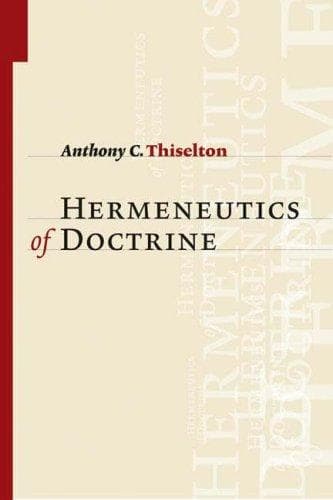
The Hermeneutics of Doctrine
علم تأويل العقيدة
L'Herméneutique de la doctrine
Editorial summary
This monograph examines how doctrinal statements about God function as interpretative frameworks rather than static propositions, offering a sophisticated hermeneutical approach to theological language and divine discourse. Thiselton argues that traditional approaches to doctrine fail to account for the dynamic, contextual nature of religious understanding, proposing instead that statements about God must be understood through their performative and transformative dimensions within believing communities.
The work engages critically with both analytical philosophy of religion and postmodern theological approaches. Against logical positivism's demand for empirical verification of religious claims, Thiselton demonstrates how doctrinal statements operate according to different linguistic logic than scientific propositions. Simultaneously, he challenges radical postmodern theologians who dissolve doctrine into mere linguistic play, maintaining that theological language can make meaningful truth claims while acknowledging its hermeneutical complexity.
Central to Thiselton's argument is the notion that doctrine functions as a "horizon of understanding" through which believers interpret experience, scripture, and tradition. Drawing extensively from Gadamer, Ricoeur, and speech act theory, he shows how doctrinal formulations about divine nature, Trinity, or incarnation are not merely descriptive but create frameworks for spiritual practice and communal identity. This hermeneutical approach reveals doctrine as living tradition rather than frozen dogma.
The monograph makes significant contributions to debates about religious language and theological method. By demonstrating how doctrines develop through interpretative communities over time, Thiselton offers a middle path between fundamentalist literalism and relativistic constructivism. His analysis shows why disputes about God often involve competing hermeneutical frameworks rather than simple disagreements about facts.
Particularly valuable is Thiselton's treatment of how doctrine shapes religious experience while being shaped by it in turn. This reciprocal relationship challenges both purely propositional and purely experiential approaches to theology. His careful analysis of specific doctrines, including divine transcendence and immanence, illustrates how hermeneutical awareness can revitalize traditional theological concepts.
The work's significance lies in its sophisticated methodology for approaching religious truth claims. By applying hermeneutical theory to doctrine, Thiselton provides tools for understanding how communities develop, transmit, and transform their understanding of God. This approach offers resources for ecumenical dialogue and addresses contemporary challenges to religious belief by reframing the nature of theological discourse itself.
Argument formulations engaged
Thiselton, Anthony C. (2007). The Hermeneutics of Doctrine.
@book{the-hermeneutics-of-doctrine-2007,
  author    = {Thiselton, Anthony C.},
  title     = {The Hermeneutics of Doctrine},
  year      = {2007},
  url       = {https://god-database.com/en/works/the-hermeneutics-of-doctrine-2007}
}