
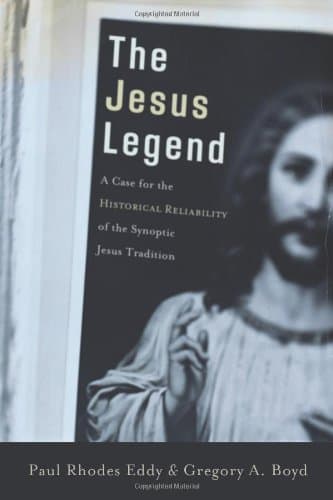
The Jesus Legend
أسطورة يسوع
La Légende de Jésus
Editorial summary
Wells presents a rigorous examination of the historical evidence for Jesus of Nazareth, arguing that the gospel accounts represent legendary development rather than historical reportage. Building upon his earlier works questioning Jesus's historicity, Wells modifies his position to acknowledge a possible historical core while maintaining that the gospels' supernatural claims and most biographical details constitute mythological accretion.
The work employs historical-critical methodology to analyze early Christian sources, particularly examining chronological developments in the Jesus tradition. Wells demonstrates that Paul's epistles, the earliest Christian documents, present a cosmic Christ figure largely devoid of biographical details found in later gospels. This silence regarding Jesus's earthly ministry, teachings, and specific historical context suggests to Wells that early Christianity centered on a divine savior figure rather than memories of a recent teacher.
Wells traces how the gospel tradition progressively historicizes Jesus, with Mark introducing narrative elements absent from Paul, and Matthew and Luke further embellishing the story with birth narratives and additional teachings. He argues this pattern indicates legendary growth rather than historical preservation. The work particularly scrutinizes claimed parallels between Jesus and contemporary Jewish and pagan traditions, suggesting the gospel writers drew upon existing religious motifs in constructing their narratives.
Against conservative scholars who defend gospel reliability, Wells marshals evidence from textual criticism, comparative religion, and historical analysis. He challenges arguments for eyewitness testimony, noting the gospels' anonymous authorship and late composition dates. The work also engages liberal theologians who accept a historical Jesus while dismissing supernatural elements, arguing their position requires arbitrary selection among equally questionable sources.
The monograph's significance lies in its systematic challenge to assumptions underlying both traditional Christian faith and mainstream historical Jesus scholarship. Wells forces examination of methodological presuppositions about ancient sources and historical reconstruction. His work contributed substantially to late twentieth-century debates about historical methodology in religious studies, influencing subsequent mythicist arguments while drawing vigorous responses from both confessional and secular scholars.
Though Wells allows for a minimal historical figure behind Christianity's origins, his radical skepticism toward gospel traditions undermines conventional approaches to Jesus research. The work exemplifies how rigorous historical criticism can challenge religious claims, contributing to broader discussions about the relationship between faith commitments and historical evidence in the study of religion.
Argument formulations engaged
Related works
Wells, G. A. (1996). The Jesus Legend. Open Court Publishing.
@book{the-jesus-legend-1996,
  author    = {Wells, G. A.},
  title     = {The Jesus Legend},
  year      = {1996},
  publisher = {Open Court Publishing},
  url       = {https://god-database.com/en/works/the-jesus-legend-1996}
}