
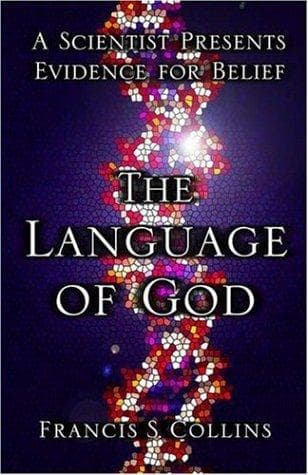
The Language of God
لغة الله
Le Langage de Dieu
Francis Collins, director of the Human Genome Project, argues that modern science — far from refuting theism — actually points toward a personal God, and that Christian faith and evolutionary biology are fully compatible.
Editorial summary
Francis Collins presents a distinctive defense of theistic belief that combines personal testimony with scientific argumentation, addressing contemporary debates about the compatibility of faith and science. As a geneticist who led the Human Genome Project, Collins offers a perspective that challenges the prevalent assumption that scientific advancement necessitates atheistic materialism. His work engages primarily with the New Atheist movement, particularly responding to claims that evolutionary biology and modern genetics have rendered religious belief intellectually untenable.
The work develops through a methodological fusion of autobiographical narrative and scientific exposition. Collins recounts his journey from atheism to Christian faith while simultaneously presenting scientific evidence that he argues points toward divine design. This dual approach allows him to address both existential and intellectual dimensions of belief. His central thesis maintains that scientific investigation, rather than undermining faith, can actually strengthen the case for God's existence when properly understood.
Collins advances three primary argumentative strategies. First, he reformulates the design argument by focusing on the fine-tuning of universal constants and the elegance of physical laws, arguing that these features suggest purposeful creation rather than random chance. Second, he develops a moral argument centered on the universality of human moral intuition, which he contends cannot be adequately explained through evolutionary psychology alone. Third, he incorporates elements of religious experience, using his personal conversion narrative to illustrate how rational individuals can encounter transcendent reality through lived experience.
The significance of Collins' contribution lies in his attempt to bridge the perceived divide between scientific and religious communities. By presenting himself as a working scientist who embraces both evolutionary theory and Christian faith, he challenges the binary opposition that dominates much popular discourse. His work particularly targets educated readers who feel forced to choose between scientific integrity and spiritual meaning.
Critics from both secular and religious perspectives have challenged Collins' synthesis. Atheist commentators argue that his scientific arguments for design rely on gaps in current knowledge, while some religious conservatives question his acceptance of evolution. Nevertheless, his work represents an important voice in contemporary discussions about science and religion, demonstrating that prominent scientists can maintain religious commitments without abandoning scientific methodology. The work's influence extends beyond academic circles, shaping public discourse about the relationship between scientific discovery and religious faith.
Argument formulations engaged
Related works
Collins, Francis The Language of God. Free Press.
@book{the-language-of-god,
  author    = {Collins, Francis},
  title     = {The Language of God},
  year      = {n.d.},
  publisher = {Free Press},
  url       = {https://god-database.com/en/works/the-language-of-god}
}