
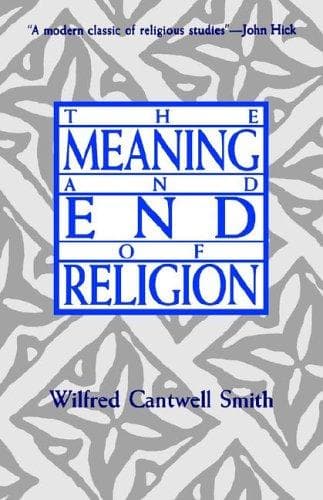
The Meaning and End of Religion
معنى ونهاية الدين
Le Sens et la Fin de la Religion
Editorial summary
Wilfred Cantwell Smith's The Meaning and End of Religion represents a watershed intervention in religious studies that profoundly impacts theological and philosophical discussions about God. Smith argues that the modern Western concept of "religion" as a systematic, bounded entity fundamentally misrepresents human religious life and distorts scholarly understanding of humanity's relationship with the divine. This conceptual error, he contends, has shaped both academic study and interfaith dialogue in ways that obscure rather than illuminate the reality of faith.
Smith traces the historical development of the term "religion" from its Latin origins through its transformation in Enlightenment thought. He demonstrates that what moderns call "religions" – Christianity, Islam, Buddhism – are reifications that emerged from European intellectual history rather than natural categories reflecting lived experience. Instead of discrete systems of belief, Smith observes two fundamental aspects of human religious life: cumulative tradition (the observable, historical dimension of texts, rituals, and institutions) and personal faith (the inner experience of transcendence and ultimate concern).
This distinction carries significant implications for understanding God. Smith argues that focusing on "religions" as competing ideological systems transforms theological questions into debates about rival truth claims between different traditions. This approach, he suggests, fundamentally misconstrues how believers actually encounter and understand the divine. Faith, in Smith's analysis, represents a universal human quality of orientation toward transcendent reality, while cumulative traditions provide diverse historical vehicles for expressing and nurturing this orientation.
The work challenges both theological exclusivism and secular reductionism. Against exclusivists, Smith maintains that authentic faith transcends institutional boundaries and doctrinal formulations. Against secularists who dismiss religion as mere human construction, he insists on the reality and universality of faith as a fundamental human capacity for encountering the transcendent. His phenomenological method, influenced by comparative studies and personal engagement with multiple traditions, particularly Islam and Hinduism, grounds these claims in empirical observation rather than abstract theorizing.
Smith's reconceptualization opens new possibilities for interfaith dialogue by shifting focus from comparing religious systems to recognizing shared participation in the human quest for the divine. His work suggests that questions about God cannot be adequately addressed through comparative analysis of religious doctrines but require attention to the living faith that animates diverse traditions. This methodological revolution continues to influence how scholars approach fundamental questions about human relationships with the divine.
Argument formulations engaged
Smith, Wilfred Cantwell (1963). The Meaning and End of Religion.
@book{the-meaning-and-end-of-religion-1963,
  author    = {Smith, Wilfred Cantwell},
  title     = {The Meaning and End of Religion},
  year      = {1963},
  url       = {https://god-database.com/en/works/the-meaning-and-end-of-religion-1963}
}