
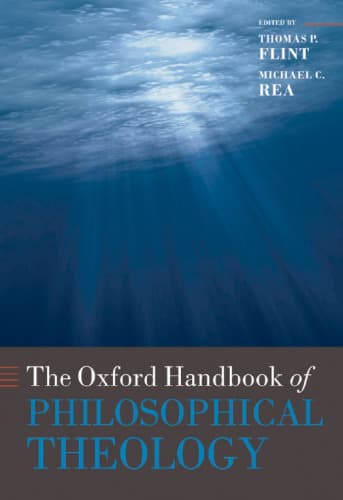
The Oxford Handbook of Philosophical Theology
كتيب أكسفورد للاهوت الفلسفي
Le Manuel d'Oxford de théologie philosophique
Editorial summary
This volume assembles twenty-three commissioned essays examining the intersection of philosophical method and Christian theological doctrine. Rea structures the collection to demonstrate how contemporary analytic philosophy engages traditional theological questions, particularly those concerning God's nature, attributes, and relationship to creation. The handbook represents a significant contribution to the revival of philosophical theology within Anglo-American philosophy, positioning itself as both an introduction to the field and a showcase of its current vitality.
The volume's first section addresses divine attributes through rigorous philosophical analysis. Contributors examine classical properties such as omnipotence, omniscience, and divine simplicity, employing modal logic, metaphysics, and epistemology to clarify and defend these concepts against contemporary objections. The treatment of divine eternity receives particular attention, with essays exploring whether God exists timelessly or temporally, and how either view affects divine knowledge and action. These discussions engage directly with challenges from process theology and open theism, defending more traditional conceptions while acknowledging their philosophical difficulties.
The second section investigates God's relationship to creation through topics including divine action, providence, and the problem of evil. Authors utilize recent work in philosophy of science and action theory to articulate how God might act in a law-governed universe without violating natural regularities. The problem of evil receives sophisticated treatment, with contributors advancing new versions of free will and soul-making theodicies while responding to evidential arguments from gratuitous suffering.
The final section examines specifically Christian doctrines including Trinity, Incarnation, and Atonement. Here the volume demonstrates philosophical theology's capacity to illuminate religious mysteries without dissolving them. Essays on the Trinity employ contemporary metaphysics of constitution and relative identity to address classical puzzles about three persons sharing one essence. The Incarnation discussions draw on recent philosophy of mind to explore how divinity and humanity unite in Christ.
Throughout, contributors engage skeptical challenges from both philosophical naturalists and theologians suspicious of rational analysis applied to revealed truths. The volume thus serves multiple audiences: philosophers seeking to understand how theistic commitments shape philosophical investigation, theologians interested in analytical tools for doctrinal clarification, and critics requiring sophisticated presentations of positions they oppose. Rea's introduction frames philosophical theology as continuous with medieval scholasticism while fully conversant with contemporary philosophical developments, positioning the discipline as neither mere apologetics nor secular philosophy of religion, but rather as faith seeking understanding through philosophical means.
Argument formulations engaged
Rea, Michael C. (2009). The Oxford Handbook of Philosophical Theology. Oxford University Press.
@book{the-oxford-handbook-of-philosophical-the,
  author    = {Rea, Michael C.},
  title     = {The Oxford Handbook of Philosophical Theology},
  year      = {2009},
  publisher = {Oxford University Press},
  url       = {https://god-database.com/en/works/the-oxford-handbook-of-philosophical-theology-2009}
}