
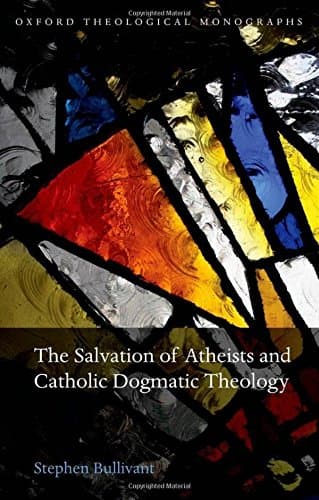
The Salvation of Atheists and Catholic Dogmatic Theology
خلاص الملحدين وعلم اللاهوت الكاثوليكي العقائدي
Le Salut des athées et la théologie dogmatique catholique
Editorial summary
This monograph examines how Catholic theology has developed its understanding of the salvation of atheists, tracing doctrinal evolution from exclusivist positions to the inclusive framework articulated at Vatican II. Bullivant analyzes the theological tensions inherent in reconciling traditional Catholic claims about the necessity of faith for salvation with contemporary recognition that sincere atheists may achieve salvation through implicit faith or invincible ignorance.
The work situates itself within post-conciliar Catholic theology, engaging with magisterial documents and theological commentary to demonstrate how the Church's approach to atheism has undergone significant transformation. Bullivant examines key texts including Lumen Gentium and Gaudium et Spes, showing how Vatican II marked a watershed in Catholic thinking about non-believers. He traces earlier theological developments that prepared for this shift, including the concept of baptism of desire and theories about implicit faith developed by theologians such as Karl Rahner.
Central to Bullivant's analysis is the distinction between culpable and inculpable atheism. He explores how Catholic theology has come to acknowledge that many atheists reject not God himself but distorted representations of God, and that such rejection may paradoxically express an authentic search for truth. The monograph examines the theological category of "anonymous Christians" while also noting criticisms of this approach as potentially patronizing to non-believers.
The work contributes to debates about religious pluralism and the scope of salvation by demonstrating how a major Christian tradition has grappled with the challenge posed by sincere non-belief. Bullivant shows how Catholic theology has moved from viewing atheism primarily as moral failure to recognizing it as a complex phenomenon that may arise from psychological, social, or intellectual factors beyond individual culpability. This shift reflects broader developments in Catholic engagement with modernity and religious diversity.
Methodologically, Bullivant combines historical theology with systematic analysis, tracking doctrinal development while examining the coherence of contemporary Catholic positions. His work illuminates ongoing tensions between maintaining the distinctiveness of Christian revelation and acknowledging salvific possibilities outside explicit faith. The monograph serves both as historical documentation of theological change and as contribution to contemporary discussions about the relationship between belief, morality, and ultimate human destiny in Catholic thought.
Argument formulations engaged
Related works
Bullivant, Stephen (2012). The Salvation of Atheists and Catholic Dogmatic Theology. Oxford University Press.
@book{the-salvation-of-atheists-and-catholic-d,
  author    = {Bullivant, Stephen},
  title     = {The Salvation of Atheists and Catholic Dogmatic Theology},
  year      = {2012},
  publisher = {Oxford University Press},
  url       = {https://god-database.com/en/works/the-salvation-of-atheists-and-catholic-dogmatic-theology-2012}
}