
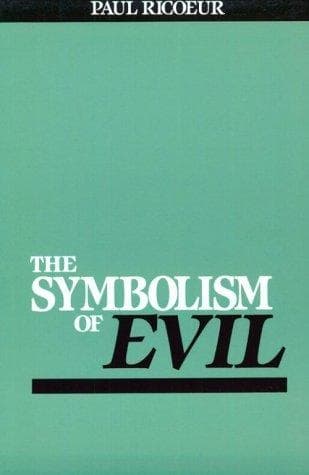
The Symbolism of Evil
رمزية الشر
Le Symbolisme du mal
Editorial summary
Paul Ricoeur's The Symbolism of Evil represents a groundbreaking hermeneutical investigation into the primary symbols through which human beings have historically conceptualized and articulated the experience of evil. This work, which forms the conclusion of Ricoeur's earlier project on the philosophy of will, shifts from phenomenological description to hermeneutical interpretation, marking a crucial methodological turn in his philosophical development.
Ricoeur argues that evil cannot be approached through direct rational analysis but must be understood through the symbolic expressions that emerge from lived experience. He identifies and analyzes three primary symbols: defilement, sin, and guilt. These symbols, he contends, form a progressive series wherein each subsequent symbol internalizes and transforms its predecessor. Defilement represents the most archaic experience of evil as external contamination; sin emerges as a relational rupture before God; guilt constitutes the internalization of fault within individual consciousness.
The work's most significant contribution lies in its analysis of myths as secondary elaborations of these primary symbols. Ricoeur examines four fundamental mythical structures: the drama of creation, the tragic vision, the Adamic myth, and the myth of the exiled soul. Of particular importance is his treatment of the Adamic myth, which he argues provides the most developed symbolic framework for understanding evil as both contingent and universally human. This myth, unlike others, preserves the tension between the radical nature of evil and human responsibility.
Methodologically, Ricoeur develops what he calls a "hermeneutics of symbols," arguing that symbols give rise to thought and cannot be reduced to conceptual language. This approach challenges both rationalist dismissals of religious symbolism and fundamentalist literal readings. He insists that modern critical consciousness must pass through criticism to reach a "second naivete" that can appreciate symbolic meaning without sacrificing intellectual rigor.
The work's significance for discussions of God emerges through its rehabilitation of religious language as philosophically serious. By demonstrating how symbols of evil necessarily invoke questions of ultimate meaning, sacred order, and human limits, Ricoeur shows that the problem of evil cannot be addressed without engaging theological categories. His hermeneutical method provides a sophisticated framework for understanding religious discourse that avoids both uncritical acceptance and reductive dismissal, thus opening new possibilities for philosophical engagement with theological questions in a post-critical age.
Argument formulations engaged
Related works
Ricoeur, Paul (1967). The Symbolism of Evil. Harper & Row.
@book{the-symbolism-of-evil-1967,
  author    = {Ricoeur, Paul},
  title     = {The Symbolism of Evil},
  year      = {1967},
  publisher = {Harper & Row},
  url       = {https://god-database.com/en/works/the-symbolism-of-evil-1967}
}