
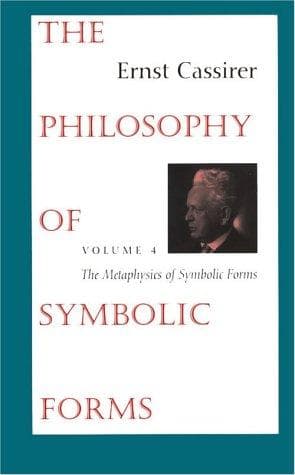
The Philosophy of Symbolic Forms
فلسفة الأشكال الرمزية
La Philosophie des formes symboliques
Editorial summary
Ernst Cassirer's "The Philosophy of Symbolic Forms" presents a comprehensive theory of human culture through the lens of symbolic meaning-making, offering significant implications for understanding religious consciousness and the concept of God. This three-volume work, published between 1923 and 1929, develops a neo-Kantian framework that positions symbolic forms as the fundamental structures through which human beings construct their reality, including their religious and theological understanding.
Cassirer argues that human consciousness operates through various symbolic forms—language, myth, religion, art, history, and science—each constituting a distinct way of apprehending and organizing experience. Rather than viewing these forms hierarchically or reducing one to another, he treats them as autonomous yet interrelated modes of symbolic expression. This approach has profound consequences for understanding religious thought and the God concept, as it situates religious symbolism as a legitimate and irreducible form of human meaning-making alongside scientific rationality.
The work's treatment of myth and religion proves particularly relevant to theological discourse. Cassirer contends that mythical thinking represents a primary symbolic form through which humans initially structure their experience of the sacred. Religious consciousness emerges from, yet transcends, mythical thought by developing more abstract and ethical conceptions of divinity. This developmental account neither dismisses religious symbolism as primitive nor reduces it to other forms of expression, instead recognizing it as a distinct modality of human understanding.
Cassirer's methodology draws heavily from the Marburg School of neo-Kantianism, particularly Hermann Cohen's work, while incorporating insights from contemporary anthropology, linguistics, and psychology. His approach challenges both naive realism and radical skepticism regarding religious claims by focusing on the functional role of symbolic forms in constituting meaningful experience. This positions him against both positivist reductions of religion and dogmatic theological assertions.
The significance of Cassirer's contribution to the God debate lies in his sophisticated defense of religious symbolism as a valid form of human understanding without committing to specific theological claims. By analyzing how the concept of God functions within the symbolic form of religion, he provides a philosophical framework that respects religious experience while maintaining critical distance. This approach influences subsequent discussions in philosophy of religion, particularly regarding the cognitive status of religious language and the relationship between religious symbols and ultimate reality.
Argument formulations engaged
Related works
Cassirer, Ernst (1923). The Philosophy of Symbolic Forms.
@book{the-philosophy-of-symbolic-forms-1923,
  author    = {Cassirer, Ernst},
  title     = {The Philosophy of Symbolic Forms},
  year      = {1923},
  url       = {https://god-database.com/en/works/the-philosophy-of-symbolic-forms-1923}
}