
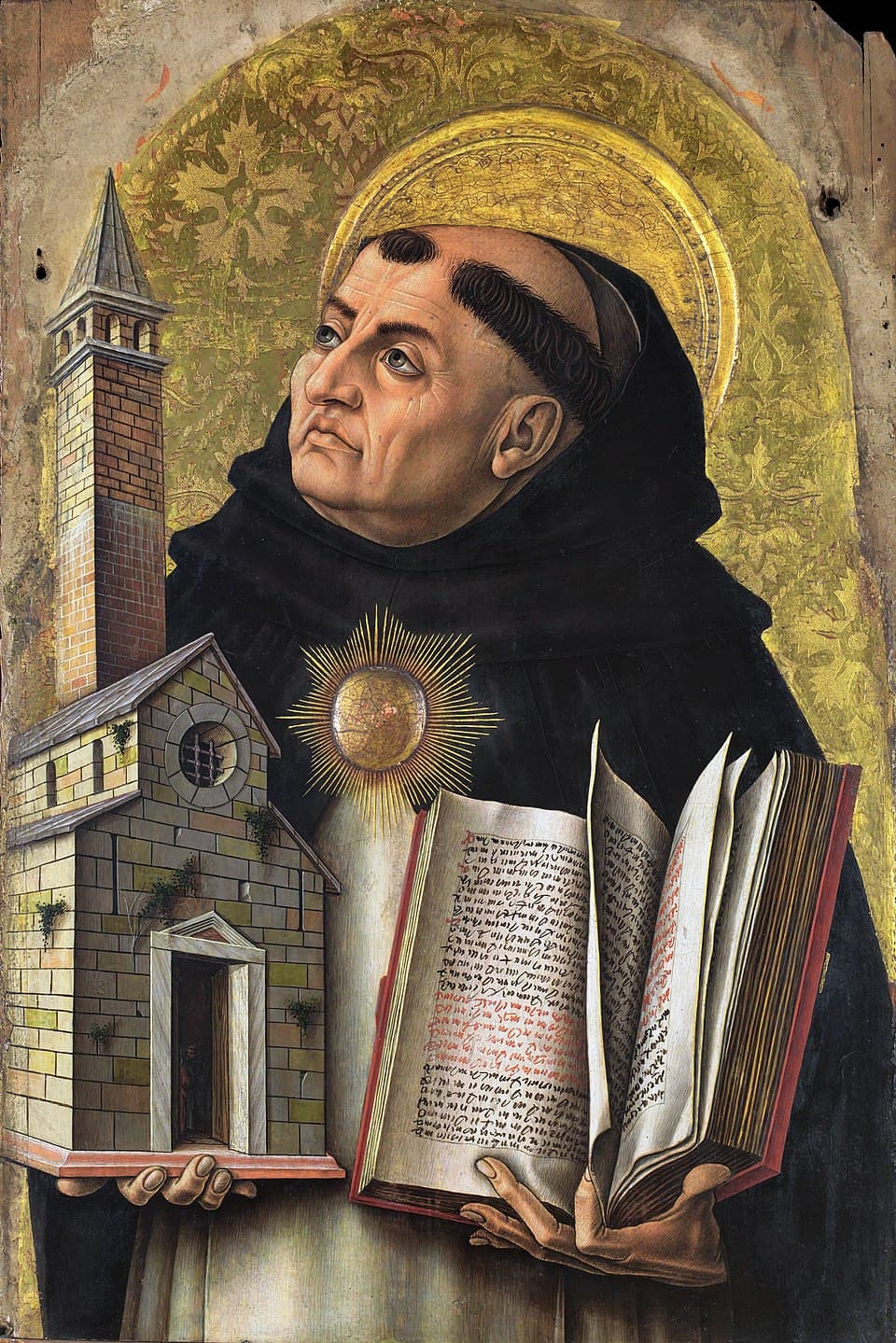
The Thought of Thomas Aquinas
فكر توما الأكويني
La Pensée de Thomas d'Aquin
Editorial summary
This comprehensive study examines Thomas Aquinas's philosophical theology, demonstrating how his synthesis of Aristotelian philosophy and Christian doctrine produces a sophisticated account of God's existence and nature. Davies presents Aquinas as offering rational arguments for theism that remain philosophically significant, emphasizing how Aquinas grounds theological claims in metaphysical reasoning rather than mere religious assertion.
The work systematically reconstructs Aquinas's natural theology, beginning with the Five Ways that argue from observed features of the world to God's existence. Davies clarifies how these arguments function not as empirical proofs but as metaphysical demonstrations, each revealing different aspects of divine causality. He emphasizes Aquinas's distinction between knowing that God exists and comprehending what God is, showing how negative theology shapes Aquinas's approach to divine attributes. The analysis demonstrates how Aquinas derives God's simplicity, perfection, goodness, infinity, immutability, eternity, and unity through rigorous philosophical argument rather than scriptural interpretation.
Davies situates Aquinas within thirteenth-century intellectual debates, particularly his engagement with Islamic philosophers like Avicenna and Averroes, and his response to the rediscovery of Aristotle's complete corpus. This contextualization reveals how Aquinas navigated between pure philosophical rationalism and fideistic approaches, developing a middle position that maintains both reason's competence and its limitations regarding divine matters. The work addresses contemporary objections to Aquinas's arguments, particularly those raised by Hume and Kant, while showing how Thomistic responses engage modern philosophical concerns.
The monograph's particular contribution lies in presenting Aquinas's God not as a religious postulate but as a philosophical conclusion. Davies demonstrates how Aquinas's conception of God as pure actuality (actus purus) and subsistent being itself (ipsum esse subsistens) emerges from metaphysical analysis rather than revealed theology. This approach challenges both naive theism and reductive naturalism by offering a philosophically sophisticated account of divine transcendence that acknowledges the limits of human conceptualization while maintaining the rationality of theistic belief. The work thus presents Aquinas's natural theology as a rigorous philosophical system that provides reasoned grounds for affirming God's existence and certain divine attributes, making medieval arguments relevant to contemporary philosophy of religion debates.
Argument formulations engaged
Related works
Davies, Brian (1992). The Thought of Thomas Aquinas. Clarendon Press.
@book{the-thought-of-thomas-aquinas-1992,
  author    = {Davies, Brian},
  title     = {The Thought of Thomas Aquinas},
  year      = {1992},
  publisher = {Clarendon Press},
  url       = {https://god-database.com/en/works/the-thought-of-thomas-aquinas-1992}
}