
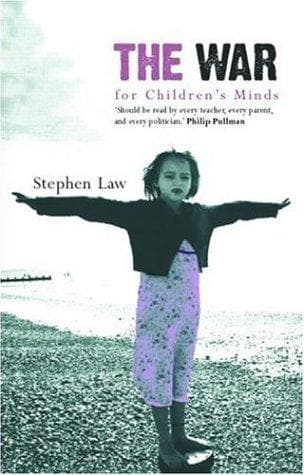
The War for Children's Minds
الحرب من أجل عقول الأطفال
La Guerre pour l'Esprit des Enfants
Editorial summary
This monograph addresses the contentious relationship between religious education and critical thinking in contemporary schooling. Law examines how different educational philosophies shape children's intellectual development, particularly regarding their capacity to evaluate religious and moral claims independently. The work enters debates about indoctrination, autonomy, and the proper aims of education in pluralistic societies.
Law argues that liberal educational approaches, which emphasize critical thinking and rational inquiry, better serve children than authoritarian models that prioritize deference to religious or traditional authority. He contends that teaching children to think critically about moral and religious questions does not undermine values but rather strengthens their capacity for genuine moral reasoning. The argument engages with conservative critics who claim that liberal education produces moral relativism and undermines religious faith.
The work develops its thesis through philosophical analysis of competing educational paradigms. Law examines how authoritarian approaches to moral and religious education often rely on what he terms "intellectual black holes" - belief systems that discourage critical examination of their own foundations. He argues these systems inhibit children's intellectual development and capacity for autonomous judgment. In contrast, he defends a liberal model that encourages children to examine evidence, consider alternatives, and develop reasoning skills applicable to all domains, including religion.
Law responds to several objections from religious educators and conservative philosophers. He addresses concerns that critical thinking education represents a form of secular indoctrination, arguing instead that it provides tools for evaluating all worldviews, religious and secular alike. The work engages with arguments about parental rights in education and the proper role of schools in shaping children's beliefs about ultimate questions.
The monograph contributes to debates about religion in public education by defending a robustly liberal approach without adopting an explicitly anti-religious stance. Law maintains that critical thinking education need not oppose religious belief but should equip children to assess religious claims using the same rational tools they apply elsewhere. His position challenges both religious conservatives who seek to shield faith from critical examination and secular approaches that would exclude religious questions from educational consideration entirely. The work offers a philosophical framework for understanding how education can respect religious diversity while maintaining intellectual standards.
Argument formulations engaged
Related works
Law, Stephen (2006). The War for Children's Minds.
@book{the-war-for-childrens-minds-2006,
  author    = {Law, Stephen},
  title     = {The War for Children's Minds},
  year      = {2006},
  url       = {https://god-database.com/en/works/the-war-for-childrens-minds-2006}
}