
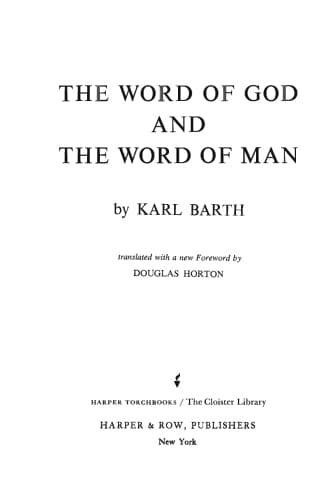
The Word of God and the Word of Man
كلمة الله وكلمة الإنسان
La Parole de Dieu et la Parole de l'Homme
Editorial summary
Karl Barth's "The Word of God and the Word of Man" (1928) marks a decisive intervention in modern Protestant theology, articulating the fundamental distinction between divine revelation and human religious consciousness. This collection of essays, written during the turbulent 1920s, develops Barth's dialectical theology as a direct challenge to the prevailing liberal Protestant tradition that had dominated German theological faculties since the nineteenth century.
The work's central argument concerns the absolute qualitative difference between God and humanity. Barth contends that God cannot be discovered through human religious experience, philosophical speculation, or cultural achievement—the very foundations upon which liberal theology had built its edifice. Instead, God remains wholly Other, known only through divine self-revelation in Jesus Christ. This revelation comes as a crisis, a judgment that exposes the pretensions of all human attempts to grasp the divine through natural theology or religious feeling.
Barth's method employs a dialectical approach that refuses synthesis between divine and human elements. Each essay demonstrates how the Word of God confronts and overturns human words about God. The preacher's task, Barth argues, involves the impossible necessity of speaking about God while acknowledging that God cannot be captured in human speech. This paradox drives theology into a permanent crisis that prevents it from becoming a comfortable cultural enterprise.
The collection directly opposes Friedrich Schleiermacher's theology of religious experience and Ernst Troeltsch's historicist approach. Where these thinkers sought to secure theology's place within modern culture by grounding it in universal human capacities or historical development, Barth insists that authentic theology begins with God's alien word breaking into human existence from beyond.
The work's significance extends beyond its immediate context of Weimar-era cultural crisis. Barth's radical emphasis on divine transcendence and revelation reshapes the terms of the God debate by rejecting both traditional natural theology and modern attempts to derive God from human experience. His insistence that knowledge of God depends entirely on God's sovereign self-disclosure challenges any theology that begins with human religious consciousness. This position would profoundly influence twentieth-century theology, inspiring both followers who developed his insights and critics who sought to recover some legitimate role for human experience and reason in theological reflection.
Argument formulations engaged
Related works
Barth, Karl (1928). The Word of God and the Word of Man.
@book{the-word-of-god-and-the-word-of-man-1928,
  author    = {Barth, Karl},
  title     = {The Word of God and the Word of Man},
  year      = {1928},
  url       = {https://god-database.com/en/works/the-word-of-god-and-the-word-of-man-1928}
}