
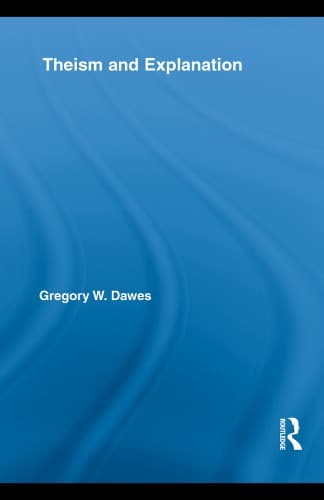
Theism and Explanation
الإيمان بالإله والتفسير
Théisme et explication
Theistic explanation, assessed by the standards of inference to the best explanation, faces serious methodological obstacles that prevent it from functioning as a genuine scientific or philosophical explanation.
Editorial summary
This monograph examines the explanatory status of theistic hypotheses within contemporary philosophy of science and philosophy of religion. Dawes investigates whether appeals to divine agency can function as legitimate explanations for natural phenomena and historical events, engaging critically with both design arguments and cumulative case arguments for God's existence.
The work addresses a fundamental methodological question: can theistic explanations meet the standards of good explanation employed in the sciences? Dawes analyzes various criteria for explanatory success, including testability, simplicity, scope, and predictive power, examining how theistic hypotheses fare against these benchmarks. He distinguishes between different types of theistic explanation, from specific divine interventions to broader appeals to divine purpose or design.
Central to the analysis is the comparison between naturalistic and theistic explanatory frameworks. Dawes explores whether methodological naturalism represents a necessary constraint on scientific explanation or an arbitrary exclusion of potentially viable hypotheses. He engages with prominent defenders of theistic explanation, including Richard Swinburne and Alvin Plantinga, while also addressing critics who argue that divine agency is inherently unsuitable as an explanatory posit.
The monograph gives particular attention to design arguments, examining both classical formulations and contemporary versions such as fine-tuning arguments and appeals to biological complexity. Dawes analyzes whether these arguments successfully establish theistic explanation as the best available account of certain features of the natural world. He also considers cumulative case arguments that combine multiple lines of evidence to support theistic belief.
Throughout the work, Dawes maintains a careful distinction between evaluating theistic explanations on their own terms and comparing them with competing naturalistic accounts. He explores the unique challenges facing theistic explanation, including the problem of divine hiddenness, the difficulty of deriving specific predictions from theistic hypotheses, and questions about the explanatory role of agent causation.
The monograph contributes to ongoing debates about the relationship between science and religion, the nature of explanation, and the epistemic status of theistic belief. By applying rigorous philosophical analysis to these questions, Dawes provides a framework for assessing when and whether appeals to divine agency might constitute genuine explanations rather than mere placeholders for ignorance.
Structured analysis
Argument formulations engaged
Related works
Dawes, Greg (2010). Theism and Explanation. Taylor & Francis.
@book{theism-and-explanation,
  author    = {Dawes, Greg},
  title     = {Theism and Explanation},
  year      = {2010},
  publisher = {Taylor & Francis},
  url       = {https://god-database.com/en/works/theism-and-explanation}
}