
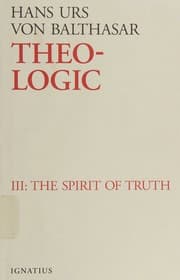
Theo-Logic: Theological Logical Theory
منطق اللاهوت: نظرية المنطق اللاهوتي
Théo-Logique : Théorie Logique Théologique
Editorial summary
Hans Urs von Balthasar's Theo-Logic: Theological Logical Theory represents a monumental contribution to 20th century theological epistemology, offering a comprehensive examination of how divine truth manifests itself through human language and reason. This collection synthesizes Balthasar's distinctive approach to the relationship between philosophical logic and theological revelation, developing what he terms a "theological logic" that transcends conventional epistemological categories.
The work engages critically with both neo-scholastic rationalism and Protestant dialectical theology, particularly Karl Barth's early emphasis on the absolute otherness of divine revelation. Balthasar argues that human reason and language, while finite, possess an inherent capacity for theological truth precisely because they participate in the divine Logos. This participation enables what he calls "the analogy of being" (analogia entis), whereby created realities can genuinely, though imperfectly, express divine truth.
Central to Balthasar's argument is his critique of modern philosophy's separation of truth from beauty and goodness. He contends that theological logic must be understood within the framework of the transcendentals, where truth cannot be isolated from its aesthetic and ethical dimensions. This integration challenges both rationalist approaches that reduce theology to propositional logic and fideist positions that deny reason's theological capacity.
The collection develops a sophisticated phenomenology of truth that draws on patristic sources, medieval scholasticism, and German idealism, while maintaining a distinctly theological orientation. Balthasar demonstrates how divine self-revelation creates the conditions for its own comprehension, establishing what he terms "the logic of love" as the fundamental structure of theological understanding. This logic operates through dramatic encounter rather than abstract deduction, requiring personal engagement with the self-revealing God.
Balthasar's method combines rigorous philosophical analysis with contemplative theology, producing a unique synthesis that has influenced both Catholic and Protestant thought. His work challenges contemporary theology to move beyond the sterile opposition between reason and revelation, proposing instead a theological logic grounded in the Christ-event as the supreme manifestation of divine truth in history. The collection's significance lies in its ambitious attempt to reconstruct theological epistemology from within the dynamics of divine self-communication, offering a profound alternative to both secularist and fundamentalist approaches to religious truth.
Argument formulations engaged
Related works
Balthasar, Hans Urs von (2000). Theo-Logic: Theological Logical Theory. Ignatius Press.
@book{theo-logic-theological-logical-theory-20,
  author    = {Balthasar, Hans Urs von},
  title     = {Theo-Logic: Theological Logical Theory},
  year      = {2000},
  publisher = {Ignatius Press},
  url       = {https://god-database.com/en/works/theo-logic-theological-logical-theory-2000}
}