
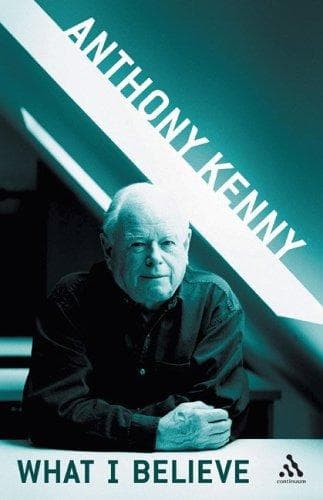
What I Believe
ما أؤمن به
Ce que je crois
Editorial summary
This intellectual memoir traces Anthony Kenny's philosophical journey from Catholic priesthood to agnostic philosophy, offering a sustained examination of religious belief through the lens of personal experience and rigorous philosophical analysis. Kenny structures his narrative around key transitions in his intellectual development, demonstrating how philosophical inquiry led him away from theistic certainty toward a carefully reasoned agnosticism.
The work begins with Kenny's early formation in Catholic seminary education, where he first encountered the tensions between scholastic theology and modern philosophy. His account reveals how exposure to analytical philosophy, particularly at Oxford, gradually undermined his confidence in traditional theistic arguments. Kenny examines the classical proofs for God's existence, finding each philosophically inadequate when subjected to contemporary logical analysis. His treatment of Aquinas's Five Ways exemplifies his approach: respectful engagement with the tradition coupled with decisive philosophical critique.
Central to Kenny's argument is his distinction between belief and faith. He contends that while religious faith may provide existential meaning and moral orientation, it cannot satisfy the epistemic standards required for justified belief. This distinction allows him to acknowledge the psychological and social value of religious practice while maintaining intellectual skepticism about theological claims. Kenny particularly scrutinizes the coherence of divine attributes, arguing that traditional formulations of omnipotence, omniscience, and perfect goodness generate intractable logical paradoxes.
The work engages extensively with both historical and contemporary philosophy of religion. Kenny addresses arguments from Anselm to Plantinga, demonstrating familiarity with the full spectrum of theistic philosophy while maintaining his critical stance. His treatment of the problem of evil receives special attention, as he argues that theodicies fail to reconcile suffering with belief in a benevolent deity.
Kenny's contribution to the God debate lies in modeling how philosophical rigor can coexist with personal narrative. Unlike polemical atheist writings, his approach remains measured and scholarly, acknowledging the complexity of religious questions while insisting on intellectual honesty. The work serves as both philosophical argument and case study in how sustained philosophical reflection can transform fundamental beliefs. His journey from priest to agnostic philosopher illustrates the power of philosophical method to reshape even deeply held convictions, making this work valuable for understanding how philosophical analysis bears on religious commitment.
Argument formulations engaged
Kenny, Anthony (2006). What I Believe. Continuum.
@book{what-i-believe-2006,
  author    = {Kenny, Anthony},
  title     = {What I Believe},
  year      = {2006},
  publisher = {Continuum},
  url       = {https://god-database.com/en/works/what-i-believe-2006}
}