
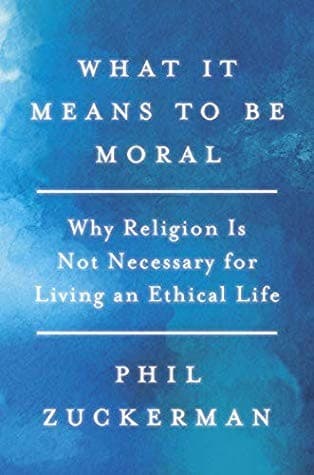
What It Means to Be Moral: Why Religion Is Not Necessary for Living an Ethical Life
ما معنى أن تكون أخلاقياً: لماذا الدين ليس ضرورياً للعيش حياة أخلاقية
Ce que signifie être moral : Pourquoi la religion n'est pas nécessaire pour vivre une vie éthique
Editorial summary
Phil Zuckerman's monograph presents a systematic challenge to the widespread assumption that religious belief provides the necessary foundation for moral behavior. Drawing on extensive sociological data and philosophical argumentation, Zuckerman contends that secular individuals and societies demonstrate equal or superior ethical outcomes compared to their religious counterparts, thereby undermining claims about religion's indispensability for morality.
The work situates itself within contemporary debates about secularization and moral foundations, responding directly to religious apologists who argue that atheism leads inevitably to moral nihilism or social decay. Zuckerman employs a multifaceted methodological approach, combining empirical sociology with moral philosophy. His sociological analysis examines crime rates, charitable giving, social trust, and various indicators of wellbeing across different societies, correlating these with levels of religiosity. The philosophical dimension engages with meta-ethical questions about the sources of moral knowledge and motivation.
Central to Zuckerman's argument is his distinction between correlation and causation in discussions of religion and morality. While acknowledging that religious communities often exhibit prosocial behaviors, he argues that these behaviors stem from social solidarity and community structures rather than theological beliefs per se. He presents evidence that highly secular nations in Scandinavia and elsewhere demonstrate lower crime rates, greater social equality, and higher levels of interpersonal trust than more religious societies. This empirical foundation supports his theoretical claim that moral behavior emerges from empathy, reason, and social cooperation rather than divine command or religious doctrine.
The work critically examines religious moral frameworks, particularly divine command theory and natural law approaches, arguing that these create problematic dependencies and potential justifications for harmful acts when interpreted literally. Zuckerman proposes instead that secular morality, grounded in human wellbeing and rational reflection, provides more reliable and flexible ethical guidance for contemporary pluralistic societies.
Zuckerman's contribution extends beyond mere critique, offering a positive vision of secular morality based on humanism and empirical understanding of human flourishing. His work challenges both academic and popular assumptions about the relationship between religious belief and ethical behavior, providing substantial evidence that moral life requires neither theistic belief nor religious institutional involvement. This intervention proves particularly significant given persistent cultural assumptions about atheist amorality and ongoing political debates about religion's role in public life.
Argument formulations engaged
Zuckerman, Phil (2019). What It Means to Be Moral: Why Religion Is Not Necessary for Living an Ethical Life. Counterpoint.
@book{what-it-means-to-be-moral-why-religion-i,
  author    = {Zuckerman, Phil},
  title     = {What It Means to Be Moral: Why Religion Is Not Necessary for Living an Ethical Life},
  year      = {2019},
  publisher = {Counterpoint},
  url       = {https://god-database.com/en/works/what-it-means-to-be-moral-why-religion-is-not-necessary-for-living-an-ethical-life-2019}
}