
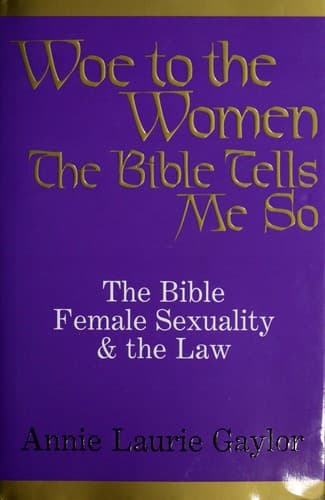
Woe to the Women: The Bible Tells Me So
الويل للنساء: الكتاب المقدس يخبرني بذلك
Malheur aux femmes : La Bible me l'a dit
Editorial summary
This feminist critique examines biblical texts to demonstrate systematic misogyny within Judeo-Christian scripture, arguing that religious authority has historically sanctioned and perpetuated the oppression of women. Annie Laurie Gaylor marshals extensive scriptural evidence to challenge the moral authority of the Bible and, by extension, the God it proclaims.
The work systematically catalogs biblical passages that denigrate, restrict, or advocate violence against women, from Genesis through the New Testament. Gaylor analyzes how scripture portrays women as property, blames them for humanity's fall, mandates their silence and submission, and codifies their legal inferiority. She examines specific biblical narratives—including those of Eve, Lot's daughters, and various unnamed women—to illustrate how sacred texts normalize female subjugation and sexual violence. The analysis extends to New Testament passages, particularly Pauline epistles, which perpetuate patriarchal structures despite Christianity's claims of spiritual liberation.
Gaylor's method combines textual analysis with historical contextualization, demonstrating how biblical misogyny has shaped Western legal systems, social norms, and contemporary religious practices. She traces connections between scriptural mandates and historical witch hunts, restrictions on women's education and property rights, and modern debates over reproductive freedom. The work particularly critiques liberal religious interpretations that attempt to rehabilitate problematic texts through selective reading or historical relativism.
Writing within the second-wave feminist movement and emerging freethought activism, Gaylor contributes to broader critiques of religious authority while specifically addressing the intersection of theology and gender oppression. Her work responds to both fundamentalist claims of biblical inerrancy and moderate attempts to preserve biblical authority while advocating gender equality. The analysis challenges readers to confront the ethical implications of venerating texts that explicitly devalue half of humanity.
The monograph's significance lies in its comprehensive documentation of biblical misogyny and its refusal to separate textual problems from theological claims. By demonstrating that sexism permeates scripture rather than appearing in isolated passages, Gaylor undermines attempts to preserve divine authority while discarding inconvenient moral teachings. Her work implies that a just God would not inspire texts that systematically oppresses women, thus contributing to feminist arguments against traditional theism. The book remains influential in secular feminist discourse and continues to challenge religious communities grappling with gender equality and scriptural authority.
Argument formulations engaged
Gaylor, Annie Laurie (1981). Woe to the Women: The Bible Tells Me So.
@book{woe-to-the-women-the-bible-tells-me-so-1,
  author    = {Gaylor, Annie Laurie},
  title     = {Woe to the Women: The Bible Tells Me So},
  year      = {1981},
  url       = {https://god-database.com/en/works/woe-to-the-women-the-bible-tells-me-so-1981}
}