
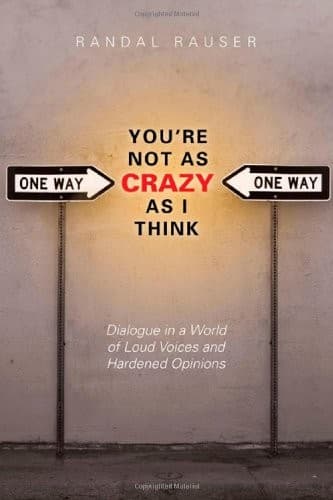
You're Not as Crazy as I Think: Dialogue in a World of Loud Voices and Hardened Opinions
لست مجنوناً كما أعتقد: حوار في عالم من الأصوات العالية والآراء المتصلبة
Tu n'es pas aussi fou que je le pense : Dialogue dans un monde de voix fortes et d'opinions endurcies
Editorial summary
Randal Rauser's monograph addresses the deteriorating quality of religious discourse in contemporary society, particularly focusing on exchanges between Christians and atheists. The work diagnoses a cultural moment characterized by polarization, where participants in theological debates increasingly resort to caricature, dismissal, and rhetorical violence rather than genuine engagement with opposing viewpoints. Rauser argues that this intellectual tribalism undermines the pursuit of truth and damages the credibility of all parties involved.
The author employs a dialogical method, drawing from epistemology, social psychology, and communication theory to analyze how cognitive biases and group dynamics corrupt religious discussions. Rauser examines specific mechanisms that perpetuate misunderstanding: confirmation bias, in-group favoritism, and the tendency to attribute malice or stupidity to those who hold different views. He illustrates these dynamics through analysis of popular atheist writers like Richard Dawkins and Christopher Hitchens, as well as their Christian counterparts in apologetics, demonstrating how both sides frequently engage in strawman arguments and fail to represent opposing positions charitably.
Central to Rauser's argument is the concept of intellectual hospitality, which he presents as both an epistemic virtue and a practical necessity for productive dialogue. He contends that genuine understanding requires temporarily inhabiting another's worldview, acknowledging the rationality of those who disagree, and recognizing the complexity of religious questions. The work challenges readers to move beyond defensive posturing toward what Rauser terms "convicted civility," maintaining firm beliefs while remaining open to correction and growth.
The monograph contributes to the God debate not by advocating for a particular position on divine existence, but by proposing methodological reforms for how such discussions should proceed. Rauser critiques the commercialization of religious controversy, where sensationalism and conflict generate more attention than nuanced exploration. He argues that the current climate of hostility obscures legitimate insights from both theistic and atheistic traditions, ultimately impoverishing public discourse about ultimate questions.
The work's significance lies in its meta-level analysis of religious disagreement itself. While others focus on first-order questions about God's existence or attributes, Rauser examines the conditions necessary for productive engagement with these questions. His approach suggests that progress in the God debate requires not merely better arguments but better arguers, those willing to extend interpretive charity even to positions they ultimately reject.
Rauser, Randal (2011). You're Not as Crazy as I Think: Dialogue in a World of Loud Voices and Hardened Opinions. Biblica.
@book{youre-not-as-crazy-as-i-think-dialogue-i,
  author    = {Rauser, Randal},
  title     = {You're Not as Crazy as I Think: Dialogue in a World of Loud Voices and Hardened Opinions},
  year      = {2011},
  publisher = {Biblica},
  url       = {https://god-database.com/en/works/youre-not-as-crazy-as-i-think-dialogue-in-a-world-of-loud-voices-and-hardened-opinions-2011}
}