
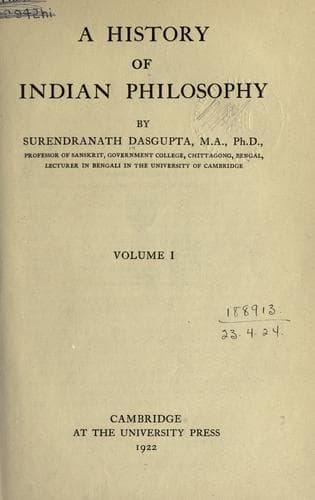
A History of Indian Philosophy Vol.4
تاريخ الفلسفة الهندية المجلد 4
Une histoire de la philosophie indienne Vol.4
Editorial summary
This monograph constitutes the fourth installment of Dasgupta's monumental survey of Indian philosophical traditions, examining diverse schools of thought that emerged during the medieval and early modern periods. The volume addresses several philosophical systems that engaged substantively with questions of divine existence, religious epistemology, and the relationship between devotional practice and metaphysical inquiry.
Dasgupta analyzes the bhakti philosophical traditions, particularly the sophisticated theological frameworks developed by Vallabha, Caitanya, and their respective schools. These systems articulate complex arguments for divine personhood, defending the reality of a supreme deity possessing both transcendent and immanent characteristics. The work examines how these philosophers countered Advaitic monism through scriptural exegesis, logical argumentation, and appeals to religious experience. Vallabha's Suddhadvaita receives extensive treatment, with Dasgupta elucidating its distinctive claim that the world represents a real transformation of Brahman rather than an illusory appearance.
The volume explores the Saiva and Sakta philosophical traditions, which developed sophisticated accounts of divine consciousness and power. These schools advanced distinctive arguments about the nature of divine agency, the relationship between Siva and Sakti, and the ontological status of the phenomenal world. Dasgupta demonstrates how Kashmir Saivism, particularly through Abhinavagupta's synthesis, constructed a non-dualistic theism that differs markedly from Sankara's Advaita while maintaining commitment to a dynamic, conscious absolute.
The text examines various Vaisnava theological schools, including those of Nimbarka and Madhva, which defended dualistic and qualified non-dualistic positions against absolute monism. These traditions developed rigorous philosophical arguments for the eternal distinction between individual souls and the supreme deity, while maintaining the latter's sovereignty and perfection. Dasgupta analyzes their scriptural hermeneutics, their critiques of competing schools, and their positive theological constructions.
Methodologically, Dasgupta employs historical-philosophical analysis, drawing extensively from primary Sanskrit sources while contextualizing each tradition within broader intellectual and religious developments. His approach combines textual exegesis with philosophical reconstruction, presenting each system's internal logic while noting points of inter-school debate. The work contributes to understanding how Indian philosophical traditions developed sophisticated natural theology, religious epistemology, and metaphysical frameworks that remain relevant to contemporary philosophy of religion. Through comprehensive documentation of these diverse approaches to ultimate reality, the volume demonstrates the richness of Indian contributions to perennial questions about divine existence, nature, and knowledge.
Argument formulations engaged
Dasgupta, Surendranath (1949). A History of Indian Philosophy Vol.4.
@book{a-history-of-indian-philosophy-vol-4-194,
  author    = {Dasgupta, Surendranath},
  title     = {A History of Indian Philosophy Vol.4},
  year      = {1949},
  url       = {https://god-database.com/en/works/a-history-of-indian-philosophy-vol-4-1949}
}