
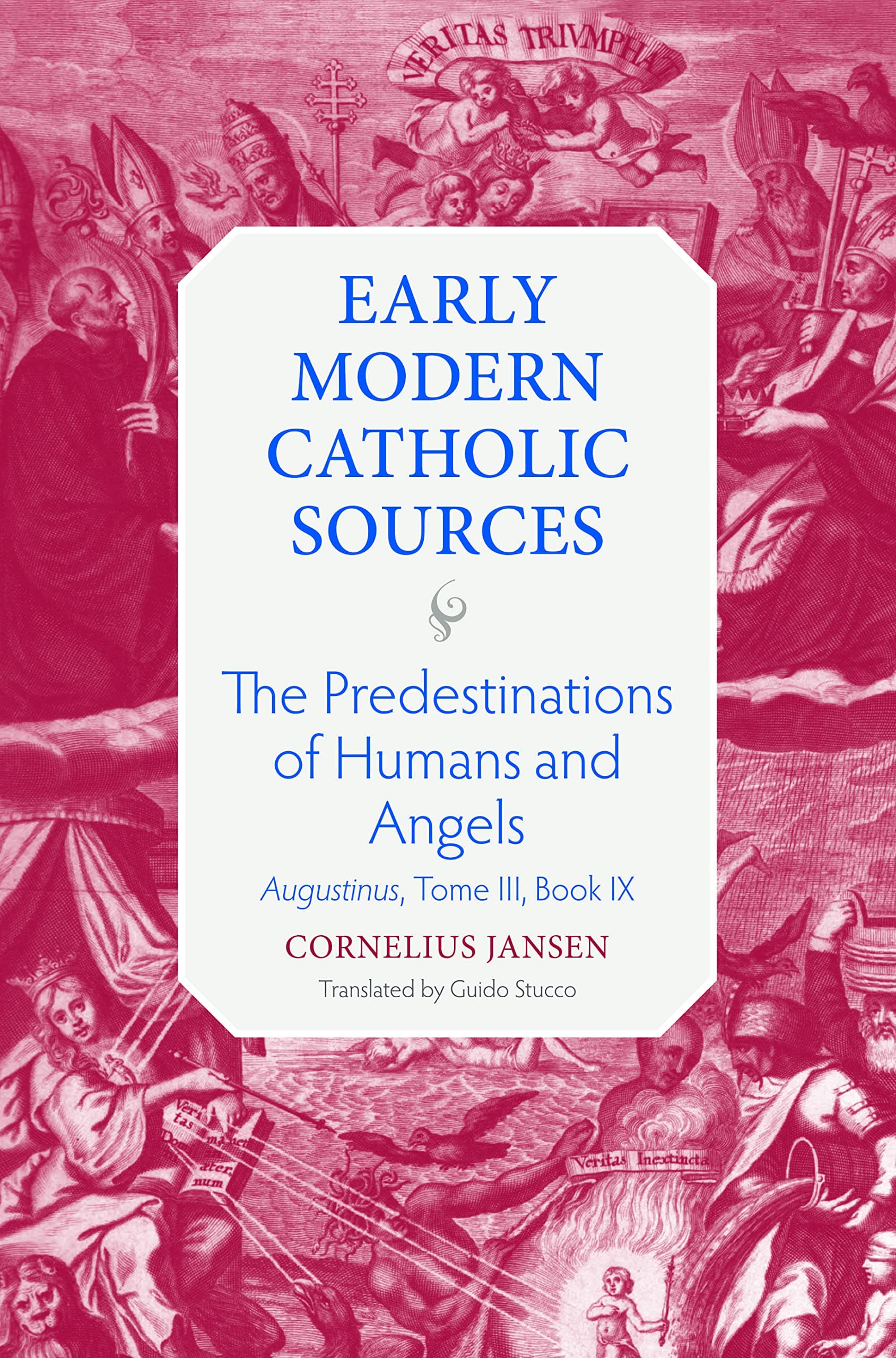
Augustinus
أوغسطينوس
Editorial summary
Cornelius Jansen's posthumously published Augustinus (1640) represents a monumental intervention in seventeenth-century theological debates concerning divine grace, human freedom, and predestination. This massive Latin treatise, running to over 1300 pages, attempts a comprehensive exposition of Augustine's teachings on grace while mounting a sustained critique of post-Tridentine Catholic theology, particularly the Jesuit position on free will and divine assistance.
Jansen structures his work in three parts, systematically examining the Pelagian controversy, Augustine's mature doctrine of grace, and contemporary theological errors. His central argument maintains that the Catholic Church has strayed from Augustine's authentic teaching by accommodating semi-Pelagian views that overestimate human capacity for good apart from grace. Against the Jesuit notion of "sufficient grace" that humans can freely accept or reject, Jansen argues for the Augustinian doctrine of efficacious grace that infallibly produces its effect without destroying human freedom.
The work's significance for debates about God lies in its radical reconceptualization of divine-human relations. Jansen presents a God whose sovereign grace operates with absolute efficacy, selecting some for salvation while passing over others. This vision challenges the dominant Molinist attempt to reconcile divine foreknowledge with libertarian free will. By insisting that fallen humanity possesses only the freedom to sin unless moved by irresistible grace, Jansen articulates a theological determinism that profoundly shapes discussions of divine justice, mercy, and human responsibility.
Methodologically, Jansen employs meticulous textual analysis of Augustine's anti-Pelagian writings, claiming to restore the Bishop of Hippo's true doctrine against centuries of dilution. His philological rigor and systematic argumentation established new standards for historical theology while provoking immediate controversy. The papal condemnation of five propositions allegedly drawn from Augustinus in 1653 initiated the Jansenist crisis that would convulse French Catholicism for over a century.
The work's enduring contribution to reflection on God concerns the perennial tension between divine sovereignty and human agency. By pushing Augustine's predestinarian logic to its ultimate conclusions, Jansen forces readers to confront fundamental questions about divine goodness, the nature of freedom, and the relationship between grace and nature. His uncompromising vision of God's absolute priority in salvation continues to challenge theological attempts to preserve meaningful human cooperation with divine initiative.
Argument formulations engaged
Related works
Jansen, Cornelius (1640). Augustinus. Catholic University of America Press.
@book{augustinus-1640,
  author    = {Jansen, Cornelius},
  title     = {Augustinus},
  year      = {1640},
  publisher = {Catholic University of America Press},
  url       = {https://god-database.com/en/works/augustinus-1640}
}