
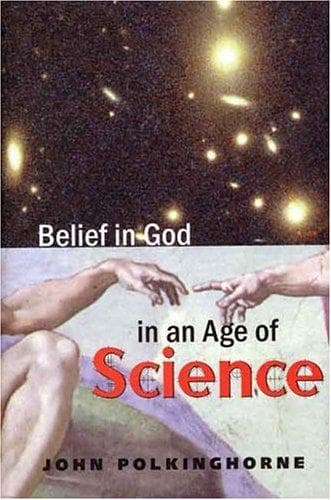
Belief in God in an Age of Science
الإيمان بالله في عصر العلم
Croire en Dieu à l'âge de la science
Editorial summary
Polkinghorne's "Belief in God in an Age of Science" presents a sophisticated defense of theistic belief by a theoretical physicist turned Anglican priest. The work argues that modern science, properly understood, provides compelling grounds for belief in God rather than undermining it. Polkinghorne develops this thesis through an examination of scientific methodology, the nature of physical reality, and the explanatory scope of theism.
Central to Polkinghorne's argument is his concept of "critical realism" in science. He contends that scientists are not merely organizing sense data but discovering real structures in nature. This realist stance, he argues, parallels and supports a realist approach to theology. Just as science reveals hidden patterns in physical reality, theology can reveal truths about divine reality. Polkinghorne emphasizes that both enterprises involve personal judgment, community validation, and provisional conclusions subject to revision.
The work engages extensively with the "fine-tuning" of physical constants necessary for carbon-based life. Polkinghorne argues that the precise calibration of fundamental forces and cosmological parameters points toward purposive design rather than chance or necessity. He critiques both strong anthropic principles and multiverse theories as inadequate explanations, maintaining that theism provides the most economical and coherent account of cosmic order.
Polkinghorne addresses the challenge of quantum mechanics to classical determinism, arguing that quantum indeterminacy opens conceptual space for divine action without violating natural laws. He develops a model of God working through "information input" rather than energy input, thereby respecting the causal closure of the physical world while maintaining genuine divine agency. This approach challenges both deistic conceptions of an absent God and interventionist models that portray God as occasionally breaking natural laws.
The text engages critically with scientific materialists like Richard Dawkins and Steven Weinberg, arguing that their reductionist worldview cannot adequately account for the emergence of consciousness, moral experience, or the intelligibility of the universe. Polkinghorne contends that theism better explains why mathematics works in describing nature, why the universe exhibits rational beauty, and why humans possess reliable cognitive faculties.
This work contributes significantly to science-religion dialogue by demonstrating how a working scientist can integrate rigorous scientific understanding with robust theistic commitment. Polkinghorne's dual expertise enables him to address scientific objections to theism with technical precision while articulating a philosophically sophisticated natural theology for the contemporary period.
Argument formulations engaged
Related works
Polkinghorne, John C. (1998). Belief in God in an Age of Science. Yale University Press.
@book{belief-in-god-in-an-age-of-science-1998,
  author    = {Polkinghorne, John C.},
  title     = {Belief in God in an Age of Science},
  year      = {1998},
  publisher = {Yale University Press},
  url       = {https://god-database.com/en/works/belief-in-god-in-an-age-of-science-1998}
}