
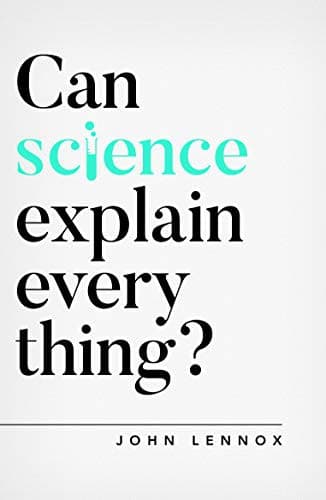
Can Science Explain Everything?
هل يستطيع العلم تفسير كل شيء؟
La science peut-elle tout expliquer ?
Editorial summary
This work presents a theistic response to contemporary scientific materialism, arguing that science, while powerful within its domain, cannot provide exhaustive explanations for all aspects of reality. The author, a mathematician and philosopher of science, challenges the increasingly prevalent view that scientific knowledge represents the only legitimate form of understanding, particularly as promoted by figures associated with New Atheism.
The text examines the scope and limitations of scientific methodology, distinguishing between what science can effectively investigate and questions that lie beyond its purview. The author argues that science excels at describing mechanisms and processes but cannot address fundamental questions of meaning, purpose, morality, and ultimate origins. He critiques the philosophical position of scientism—the belief that science alone can furnish complete knowledge of reality—as self-refuting, since this claim itself cannot be established through scientific methods.
Central to the argument is the compatibility between scientific investigation and theistic belief. The author contends that many pioneering scientists throughout history operated within theistic frameworks that motivated rather than hindered their research. He challenges the narrative of inevitable conflict between science and religion, arguing instead that the ordered, intelligible nature of the universe that makes science possible points toward a rational Creator. The work engages directly with prominent atheist scientists and philosophers, particularly addressing claims that scientific advancement necessarily leads to the elimination of religious belief.
The text explores several areas where scientific explanation reaches apparent limits: the origin of the universe, the fine-tuning of physical constants, the emergence of life, human consciousness, and the basis for rationality itself. In each case, the author suggests that theistic explanations offer more comprehensive accounts than purely naturalistic approaches. He argues that the very success of science in uncovering mathematical elegance and rational structure in nature provides evidence for a divine Mind behind the cosmos.
The work functions as both an apologetic for theism and a philosophical critique of reductionist materialism. It seeks to demonstrate that acknowledging science's limitations need not diminish its achievements but rather places them in proper perspective. The author maintains that recognizing both what science can and cannot explain opens space for theological and philosophical reflection on ultimate questions, positioning Christian theism as offering the most coherent comprehensive worldview that incorporates both scientific discoveries and human experiences of meaning, morality, and purpose.
Argument formulations engaged
Related works
Lennox, John (2019). Can Science Explain Everything?. The Good Book Company.
@book{can-science-explain-everything-2019,
  author    = {Lennox, John},
  title     = {Can Science Explain Everything?},
  year      = {2019},
  publisher = {The Good Book Company},
  url       = {https://god-database.com/en/works/can-science-explain-everything-2019}
}