
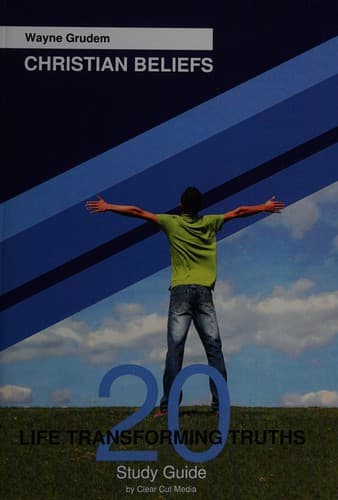
Christian Beliefs
المعتقدات المسيحية
Les croyances chrétiennes
The core doctrines of Christian faith — including the existence and nature of God, Scripture, salvation, and eschatology — form a coherent and accessible body of belief grounded in biblical teaching.
Editorial summary
Wayne Grudem's Christian Beliefs presents a systematic exposition of core Christian doctrines designed for lay readers and beginning theology students. This condensed version of his larger Systematic Theology maintains the same methodological approach while offering a more accessible entry point into Reformed evangelical theology. Grudem employs a cumulative case methodology, building doctrinal positions through careful synthesis of biblical texts, historical theological reflection, and contemporary application.
The work progresses through twenty essential Christian doctrines, beginning with the nature of Scripture and concluding with eschatological themes. Grudem's approach reflects his commitment to biblical inerrancy and Reformed theological perspectives, consistently grounding each doctrine in extensive scriptural citation and exegesis. His method involves presenting the biblical data, surveying major historical positions, and defending what he considers the most biblically faithful interpretation. This cumulative argumentation seeks to demonstrate that orthodox Christian beliefs form a coherent, intellectually defensible system when properly understood from Scripture.
Regarding the God debate, Grudem advances a robust theistic position through several interconnected arguments. His treatment of God's existence, attributes, and trinitarian nature provides philosophical and theological grounds for Christian theism. He engages contemporary challenges to theism indirectly, addressing questions of divine sovereignty, human freedom, and the problem of evil through a compatibilist framework. His discussion of creation explicitly counters naturalistic explanations, arguing for divine creation while allowing for various interpretations of Genesis within evangelical parameters.
The work's significance lies in its representation of contemporary evangelical scholarship's engagement with perennial theological questions. Grudem demonstrates how conservative Protestant theology navigates between fundamentalist biblicism and liberal revisionism, maintaining traditional doctrinal commitments while engaging modern questions. His cumulative case approach models how systematic theology functions as a comprehensive worldview, addressing metaphysical, epistemological, and ethical dimensions of human existence.
Within academic discourse on God, Grudem's contribution exemplifies confessional theology's continued vitality in the analytic tradition. While primarily addressing internal Christian audiences, the work implicitly responds to secularist and pluralist challenges by articulating a coherent, biblically grounded theistic worldview. His careful attention to logical consistency and biblical warrant reflects evangelical theology's appropriation of analytic philosophical methods in service of traditional Christian claims about God, humanity, and salvation.
Structured analysis
Structure of the work
Argument formulations engaged
Related works
Grudem, Wayne (2009). Christian Beliefs.
@book{christian-beliefs,
  author    = {Grudem, Wayne},
  title     = {Christian Beliefs},
  year      = {2009},
  url       = {https://god-database.com/en/works/christian-beliefs}
}