
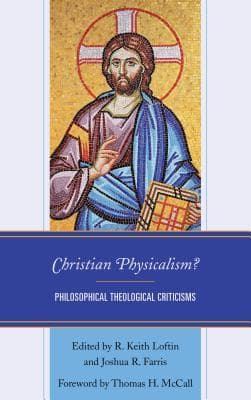
Christian Physicalism? Philosophical Theological Criticisms
الفيزيائية المسيحية؟ انتقادات فلسفية لاهوتية
Physicalisme chrétien ? Critiques philosophiques théologiques
Editorial summary
This edited volume examines the controversial question of whether physicalism about human persons can be reconciled with Christian theological commitments. The collection brings together philosophers and theologians to assess the growing movement within Christian scholarship that advocates for physicalist anthropology as a viable alternative to traditional substance dualism.
The volume addresses a fundamental tension in contemporary Christian thought. While traditional Christian doctrine has typically embraced some form of dualism, distinguishing between material bodies and immaterial souls, recent decades have witnessed increasing numbers of Christian scholars arguing that human persons are entirely physical beings. These Christian physicalists contend that neuroscience and philosophy of mind support rejecting immaterial souls while maintaining core Christian beliefs about resurrection, moral responsibility, and the imago Dei.
Loftin's collection presents critical evaluations of this physicalist project from multiple angles. Contributors examine whether physicalism can adequately account for personal identity across death and resurrection, a crucial concern given Christianity's emphasis on bodily resurrection and continuity of the person. The essays investigate how physicalists handle biblical texts that appear to presuppose dualism, particularly passages discussing the intermediate state between death and resurrection. Several chapters address whether physicalism undermines human dignity and the special status accorded to humans as bearers of God's image.
The philosophical critiques focus on broader metaphysical issues, including whether physicalism provides sufficient resources for libertarian free will, which many argue is necessary for genuine moral responsibility before God. Contributors also examine whether consciousness and intentionality can be adequately explained in purely physical terms, and whether physicalism commits one to problematic forms of reductionism incompatible with robust theism.
The work represents an important intervention in debates about divine action and human nature. If humans are purely physical, this potentially affects how God interacts with creation and whether traditional doctrines of providence remain coherent. The volume's critical perspective challenges the compatibility thesis advanced by Christian physicalists, arguing that physicalism may entail more significant revisions to Christian doctrine than its proponents acknowledge. By gathering these philosophical and theological objections, Loftin's collection serves as a comprehensive resource for those skeptical of attempts to synthesize physicalism with Christian theism, contributing to ongoing discussions about the relationship between contemporary philosophy of mind and revealed theology.
Argument formulations engaged
Loftin, R. Keith (2017). Christian Physicalism? Philosophical Theological Criticisms. Lexington Books.
@book{christian-physicalism-philosophical-theo,
  author    = {Loftin, R. Keith},
  title     = {Christian Physicalism? Philosophical Theological Criticisms},
  year      = {2017},
  publisher = {Lexington Books},
  url       = {https://god-database.com/en/works/christian-physicalism-philosophical-theological-criticisms-2017}
}