
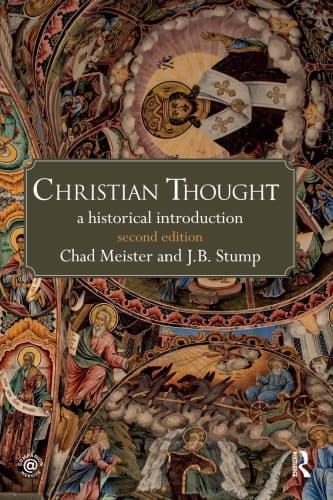
Christian Thought: A Historical Introduction
الفكر المسيحي: مقدمة تاريخية
Pensée chrétienne : Une introduction historique
Editorial summary
This comprehensive historical survey traces the development of Christian theological reflection from its origins through the contemporary period, examining how successive generations of thinkers have articulated, defended, and reformulated core Christian truth claims about God, Christ, humanity, and salvation. Meister structures the work chronologically while maintaining thematic coherence, demonstrating how Christian thought emerges through dynamic engagement with philosophical systems, cultural contexts, and internal theological disputes.
The work begins with the patristic period, exploring how early Christian thinkers like Justin Martyr, Origen, and Augustine appropriated Greek philosophical categories to articulate biblical faith in intellectually rigorous terms. Meister shows particular attention to the formation of trinitarian doctrine and christological definitions, presenting these not as abstract speculation but as attempts to preserve the coherence of Christian proclamation about God's self-revelation in Christ. The medieval section examines the synthesis of faith and reason in figures like Anselm, Aquinas, and Duns Scotus, highlighting how scholastic method sought to demonstrate the rational credibility of Christian theism through philosophical argumentation.
The treatment of Reformation thought emphasizes the epistemological shift toward scriptural authority and the doctrine of justification, while the modern period receives extensive coverage as Christian thought encounters Enlightenment criticism, scientific challenges, and religious pluralism. Meister analyzes how theologians from Schleiermacher through Barth to contemporary figures have reformulated classical doctrines in response to modern and postmodern critiques. The final sections address current debates including feminist and liberation theologies, the relationship between science and faith, and Christian responses to religious diversity.
Throughout, Meister maintains a descriptive approach that presents each thinker's contributions within their historical context while noting connections across periods. The work serves as both an introduction for students and a reference for scholars, providing clear exposition of complex theological arguments while demonstrating their continued relevance. By tracing how Christian thinkers have persistently engaged philosophical and cultural challenges to articulate reasoned defenses of theistic belief, the volume illuminates the intellectual vitality of the Christian tradition. The extensive bibliography and careful documentation make this a valuable resource for understanding how Christian thought has developed sophisticated responses to perennial questions about God, human nature, and ultimate reality.
Argument formulations engaged
Related works
Meister, Chad (2016). Christian Thought: A Historical Introduction. Routledge.
@book{christian-thought-a-historical-introduct,
  author    = {Meister, Chad},
  title     = {Christian Thought: A Historical Introduction},
  year      = {2016},
  publisher = {Routledge},
  url       = {https://god-database.com/en/works/christian-thought-a-historical-introduction-2016}
}