
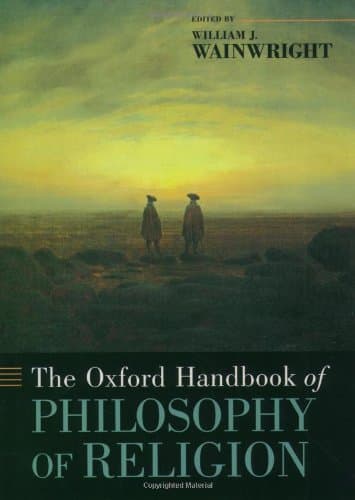
The Oxford Handbook of Philosophy of Religion
دليل أكسفورد لفلسفة الدين
Manuel d'Oxford de philosophie de la religion
Editorial summary
This comprehensive volume, edited by Eleonore Stump, represents a significant contribution to contemporary philosophy of religion by assembling leading scholars to examine central questions about God's existence, nature, and relationship to the world. The handbook demonstrates how analytic philosophy of religion has evolved beyond traditional natural theology into a sophisticated interdisciplinary enterprise engaging with epistemology, metaphysics, ethics, and philosophy of mind.
The collection's primary achievement lies in its systematic treatment of both classical and emerging topics in philosophical theology. Traditional concerns such as divine attributes, arguments for God's existence, and the problem of evil receive rigorous analytical treatment using contemporary philosophical methods. Contributors examine divine simplicity, omniscience, and providence through the lens of recent developments in metaphysics and modal logic. The cosmological and ontological arguments are reassessed using tools from contemporary analytic philosophy, while new versions of design arguments incorporate findings from physics and biology.
Particularly noteworthy is the volume's engagement with religious epistemology, including reformed epistemology's challenge to evidentialist assumptions about rational religious belief. Several chapters explore whether belief in God can be properly basic or requires evidential support, advancing debates initiated by Alvin Plantinga and others. The handbook also addresses religious diversity and pluralism, examining whether conflicting religious claims undermine the rationality of religious belief.
The work's methodological approach reflects the broader revival of philosophy of religion within analytic philosophy since the 1960s. Contributors employ formal logic, conceptual analysis, and careful argumentation while remaining sensitive to theological traditions. This represents a departure from both logical positivism's dismissal of religious language and Continental philosophy's more oblique approaches to religious questions.
Stump's editorial vision ensures balanced treatment of theistic, atheistic, and agnostic positions. While many contributors work within Christian philosophical theology, the volume includes critical perspectives and acknowledges challenges to traditional theism. The handbook thus serves multiple audiences: philosophers seeking rigorous analysis of religious concepts, theologians interested in philosophical methods, and scholars tracking the field's development.
By providing authoritative discussions of perennial and contemporary issues, this handbook establishes philosophy of religion's credentials as a vibrant subdiscipline. It demonstrates how questions about God remain philosophically fertile, generating sophisticated debates that connect with broader philosophical concerns about knowledge, reality, and value.
Argument formulations engaged
Related works
Stump, Eleonore (2005). The Oxford Handbook of Philosophy of Religion. Oxford University Press.
@book{the-oxford-handbook-of-philosophy-of-rel,
  author    = {Stump, Eleonore},
  title     = {The Oxford Handbook of Philosophy of Religion},
  year      = {2005},
  publisher = {Oxford University Press},
  url       = {https://god-database.com/en/works/the-oxford-handbook-of-philosophy-of-religion-2005}
}