
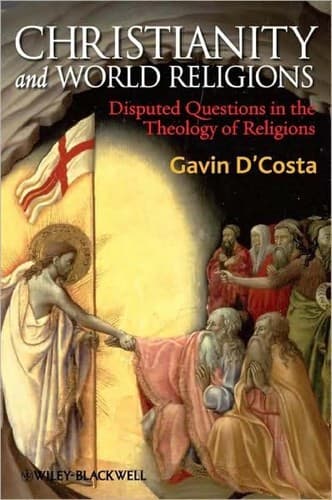
Christianity and World Religions
المسيحية وأديان العالم
Christianisme et religions mondiales
Editorial summary
This monograph examines Christianity's theological engagement with religious pluralism through a sophisticated critique of pluralist theology and defense of particularist Christian claims. D'Costa challenges the dominant paradigm in theology of religions associated with John Hick and Paul Knitter, arguing that pluralist approaches, despite their apparent openness to other faiths, paradoxically impose Western liberal assumptions that undermine genuine religious difference. The work develops a trinitarian theology of religions that maintains Christianity's distinctive truth claims while providing resources for respectful interfaith dialogue.
D'Costa's methodology combines philosophical analysis of pluralist epistemology with constructive systematic theology rooted in Roman Catholic tradition. He demonstrates how pluralist theologies of religion, which claim all religions offer equally valid paths to ultimate reality, rest on modernist assumptions about religious experience that effectively domesticate diverse religious traditions. The author argues that Hick's neo-Kantian distinction between the Real-in-itself and culturally conditioned religious experiences creates an abstract deity divorced from concrete religious practice and belief. This critique extends to feminist and liberationist versions of pluralism, which D'Costa contends similarly impose external criteria that judge religions by standards alien to their own self-understanding.
The constructive dimension develops a robustly trinitarian approach that affirms both Christianity's particular claims about Christ and the possibility of God's salvific presence in other religions. Drawing on patristic sources and Vatican 2 documents, D'Costa articulates how the doctrines of Trinity and Incarnation provide resources for recognizing truth and grace in non-Christian traditions without abandoning Christianity's distinctive witness. He explores how the Holy Spirit's universal presence enables Christians to expect genuine encounters with God beyond church boundaries while maintaining the normativity of Christ's revelation.
The work's significance lies in reframing debates about religious diversity beyond the exhausted typology of exclusivism, inclusivism, and pluralism. D'Costa demonstrates how apparent theological generosity toward other religions can mask cultural imperialism, while robust commitment to particular religious identity can ground authentic dialogue. His argument challenges both conservative Christians who deny value in other religions and liberals who minimize distinctive Christian claims. The monograph contributes to broader discussions about how monotheistic faiths can maintain their truth claims while engaging constructively in pluralistic contexts, offering a sophisticated model for theology of religions that avoids both relativism and triumphalism.
Argument formulations engaged
D'Costa, Gavin (2003). Christianity and World Religions. Wiley-Blackwell.
@book{christianity-and-world-religions-2003,
  author    = {D'Costa, Gavin},
  title     = {Christianity and World Religions},
  year      = {2003},
  publisher = {Wiley-Blackwell},
  url       = {https://god-database.com/en/works/christianity-and-world-religions-2003}
}