
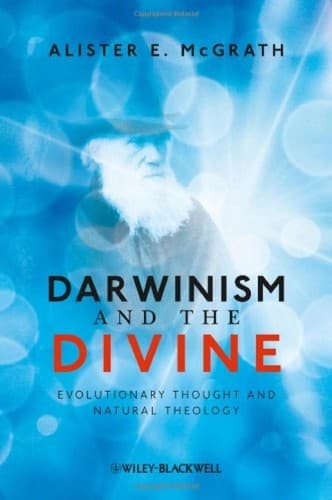
Darwinism and the Divine.. Evolutionary Thought and Natural Theology
الداروينية والإله.. الفكر التطوري واللاهوت الطبيعي
Le Darwinisme et le divin.. La pensée évolutionniste et la théologie naturelle
Evolutionary theory need not destroy natural theology; rather, it forces its reformulation away from naive design readings toward more disciplined theological reflection.
Editorial summary
Alister McGrath's "Darwinism and the Divine" examines the complex historical relationship between evolutionary theory and natural theology from the publication of Darwin's "Origin of Species" through contemporary debates. McGrath traces how Christian theologians have responded to evolutionary thought, arguing that the interaction between Darwinism and theology has been far more nuanced and productive than popular narratives of inevitable conflict suggest.
The work employs intellectual history to demonstrate that many Victorian theologians initially welcomed evolutionary theory as compatible with, even supportive of, natural theology. McGrath shows how figures like Aubrey Moore and Frederick Temple integrated evolution into their theological frameworks, viewing natural selection as God's method of creation. This historical analysis challenges simplistic warfare metaphors that dominate public understanding of science-religion relations.
McGrath engages critically with both design arguments and naturalistic explanations of religion. He contends that while Darwin's theory undermined William Paley's specific formulation of the design argument, it did not eliminate natural theology altogether. Instead, evolutionary theory prompted more sophisticated theological responses that moved beyond mechanical design to consider divine action through natural processes. The author examines how contemporary theologians have developed evolutionary theodicies and reconceptualized divine providence in light of biological science.
The monograph addresses naturalistic accounts that explain religion as an evolutionary byproduct or adaptation. McGrath argues these explanations, while illuminating religion's natural history, cannot determine its truth value or eliminate theological interpretation. He maintains that accepting religion's evolutionary origins does not necessitate atheistic conclusions, as the proximate evolutionary causes of religious belief remain compatible with ultimate theological explanations.
McGrath's contribution lies in demonstrating that the theological reception of Darwinism has been marked by creative appropriation rather than mere opposition. His historical scholarship reveals multiple models for integrating evolution and theology, from process thought to contemporary divine action theories. The work challenges both religious fundamentalists who reject evolution and scientific materialists who assume evolution disproves theism. By recovering forgotten voices in the Victorian synthesis of evolution and faith, McGrath provides resources for contemporary dialogue between theology and evolutionary biology. His analysis suggests that natural theology, properly reconceived, remains viable after Darwin.
Structured analysis
Structure of the work
Argument formulations engaged
Related works
McGrath, Alister (2011). Darwinism and the Divine.. Evolutionary Thought and Natural Theology.
@book{darwinism-and-the-divine-evolutionary-th,
  author    = {McGrath, Alister},
  title     = {Darwinism and the Divine.. Evolutionary Thought and Natural Theology},
  year      = {2011},
  url       = {https://god-database.com/en/works/darwinism-and-the-divine-evolutionary-thought-and-natural-theology}
}