
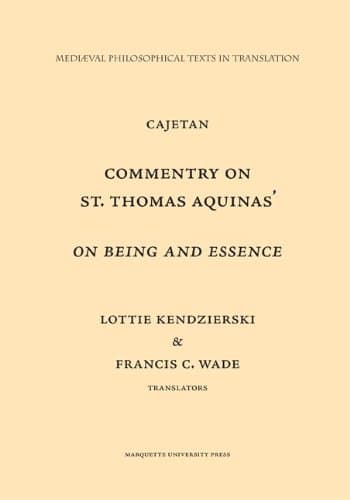
De Ente et Essentia (On Being and Essence)
الوجود والماهية
De Ente et Essentia (De l'être et de l'essence)
Editorial summary
This early metaphysical treatise establishes Thomas Aquinas's foundational distinction between essence and existence, providing the philosophical groundwork for his later arguments for God's existence. Written during his first Paris regency, the work demonstrates how Aristotelian philosophy can be transformed to serve Christian theological purposes, particularly in establishing God as pure act of existence.
Aquinas begins by analyzing the structure of created beings, arguing that in all finite entities, essence (what something is) and existence (that it is) are really distinct. This distinction becomes crucial for understanding why created things require a cause. A thing's essence does not include existence; therefore, existence must be received from another source. This leads to the central insight that there must be one being in whom essence and existence are identical - a being whose very essence is to exist.
The work systematically examines different modes of being, from material substances through separated substances (angels) to demonstrate that composition of essence and existence characterizes all created reality. Material beings are composed of matter and form, which constitutes their essence, to which existence is added. Immaterial created beings lack matter but still possess the composition of essence and existence. Only in God do we find absolute simplicity, where essence and existence are one.
This metaphysical analysis provides the foundation for Aquinas's argument that God alone exists necessarily. While created beings have existence by participation, receiving their being from another, God exists by his very nature. This establishes God not merely as a first cause in a temporal sense, but as the continuous ontological ground of all reality. Every moment of a creature's existence depends on God's conserving action.
The treatise's significance lies in its philosophical rigor and systematic approach to the God question. Rather than beginning with revelation or religious experience, Aquinas starts with careful analysis of ordinary objects and demonstrates through reason alone that their very structure points to a necessary being. This method would profoundly influence subsequent natural theology, establishing a tradition of arguing from the contingency of finite beings to the existence of a necessary being. The work remains central to Thomistic philosophy and continues to generate scholarly debate about the relationship between essence and existence and its implications for proving God's existence.
Argument formulations engaged
Related works
Aquinas, Thomas (1252). De Ente et Essentia (On Being and Essence). Marquette Univ Pr.
@book{de-ente-et-essentia-on-being-and-essence,
  author    = {Aquinas, Thomas},
  title     = {De Ente et Essentia (On Being and Essence)},
  year      = {1252},
  publisher = {Marquette Univ Pr},
  url       = {https://god-database.com/en/works/de-ente-et-essentia-on-being-and-essence-1252}
}