
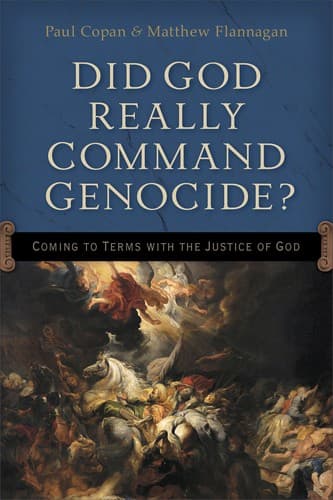
Did God Really Command Genocide? Coming to Terms with the Justice of God
هل أمر الله حقاً بالإبادة الجماعية؟ التصالح مع عدالة الله
Dieu a-t-il vraiment ordonné le génocide ? Accepter la justice de Dieu
Editorial summary
This monograph addresses one of the most challenging moral objections to biblical theism: the divine commands to destroy entire Canaanite populations recorded in the Old Testament. Paul Copan engages directly with what critics call "texts of terror," particularly those passages where God appears to command the Israelites to commit genocide against men, women, and children in the conquest narratives of Joshua and other biblical books.
Copan develops a multifaceted defense that combines Ancient Near Eastern historical context, linguistic analysis, and philosophical argumentation. He contends that modern readers fundamentally misunderstand these texts due to cultural distance and translation issues. Central to his argument is the claim that the biblical language employs deliberate hyperbole common to ancient warfare rhetoric. When texts speak of destroying "all" inhabitants, Copan argues this represents conventional military exaggeration rather than literal description, similar to how ancient conquest inscriptions routinely claimed total victory while archaeological evidence shows continued habitation.
The work challenges new atheist critics like Richard Dawkins and Christopher Hitchens, who cite these passages as evidence of divine moral bankruptcy. Against their readings, Copan marshals evidence that the Canaanite society had reached extreme moral degradation, including child sacrifice and ritual prostitution, warranting divine judgment after centuries of patient warning. He frames the conquest not as ethnic cleansing but as capital punishment on a national scale for persistent wickedness.
Copan further argues that most Canaanites had opportunity to flee before Israelite attacks, that the primary targets were military fortifications rather than civilian populations, and that archaeological evidence supports limited rather than comprehensive destruction. He also emphasizes biblical texts showing God's concern for Canaanite survivors like Rahab and the Gibeonites.
The monograph's significance lies in its systematic response to what many consider the strongest moral argument against biblical authority. By combining textual criticism, archaeological findings, and moral philosophy, Copan attempts to demonstrate that properly understood, these difficult passages need not undermine rational belief in a morally perfect deity. His work represents a sophisticated example of contemporary evangelical scholarship engaging critical challenges while maintaining traditional commitments to biblical reliability and divine goodness. Whether fully persuasive or not, the monograph exemplifies how conservative biblical scholars address modern ethical critiques through interdisciplinary analysis rather than mere assertion of faith.
Argument formulations engaged
Related works
Copan, Paul (2014). Did God Really Command Genocide? Coming to Terms with the Justice of God. Baker Books.
@book{did-god-really-command-genocide-coming-t,
  author    = {Copan, Paul},
  title     = {Did God Really Command Genocide? Coming to Terms with the Justice of God},
  year      = {2014},
  publisher = {Baker Books},
  url       = {https://god-database.com/en/works/did-god-really-command-genocide-coming-to-terms-with-the-justice-of-god-2014}
}