
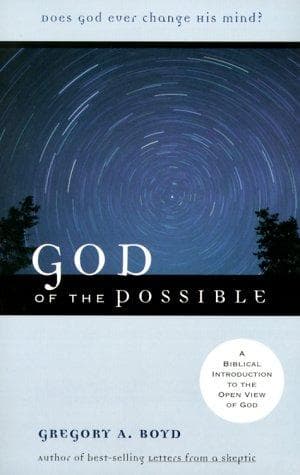
God of the Possible
إله الممكن
Dieu du possible
Editorial summary
This work presents a systematic defense of open theism, challenging traditional theological conceptions of divine foreknowledge and providence. Boyd argues that God possesses perfect knowledge of all that is logically knowable, but the future contains genuine possibilities that remain undetermined until free agents actualize them. The text contends that this view better accounts for biblical narratives, the problem of evil, and the nature of divine-human relationships than classical theism's doctrine of exhaustive foreknowledge.
The author employs a threefold methodological approach. First, he undertakes extensive biblical exegesis, examining passages where God appears to change plans, express regret, or test individuals to discover their choices. Boyd interprets these texts as revealing genuine divine responsiveness rather than anthropomorphic accommodation. Second, he develops philosophical arguments about the nature of time, possibility, and freedom, drawing on contemporary discussions in metaphysics while maintaining accessibility for non-specialists. Third, he addresses pastoral implications, arguing that open theism provides more satisfying responses to suffering and enhances the meaningfulness of prayer.
The work engages critically with classical theistic positions, particularly those of Augustine, Aquinas, and Calvin, as well as contemporary defenders of divine foreknowledge such as William Lane Craig. Boyd challenges the Greek philosophical influences he identifies in traditional theology, arguing that biblical authors operated with a more dynamic understanding of God's relationship to time and creation. He contends that the classical view makes genuine freedom impossible and renders petitionary prayer problematic.
The text's significance lies in its role in crystallizing and popularizing open theist theology for broader evangelical audiences. While earlier scholars like Clark Pinnock and John Sanders developed similar ideas, Boyd's work achieved wider readership and sparked intense debate within evangelical institutions. His emphasis on "divine risk" and authentic relationship between God and creation challenged fundamental assumptions about divine perfection and sovereignty that had dominated Protestant theology.
Boyd's contribution extends beyond academic theology to practical ministry, as he demonstrates how open theism addresses existential questions about suffering, prayer, and human responsibility. The work represents a pivotal moment in late twentieth-century evangelical theology, provoking responses from numerous theologians and contributing to ongoing reassessments of classical divine attributes. His integration of biblical studies, philosophical theology, and pastoral concern exemplifies a holistic approach to the question of God's nature and relationship to temporal reality.
Argument formulations engaged
Related works
Boyd, Greg (2000). God of the Possible.
@book{god-of-the-possible-2000,
  author    = {Boyd, Greg},
  title     = {God of the Possible},
  year      = {2000},
  url       = {https://god-database.com/en/works/god-of-the-possible-2000}
}