
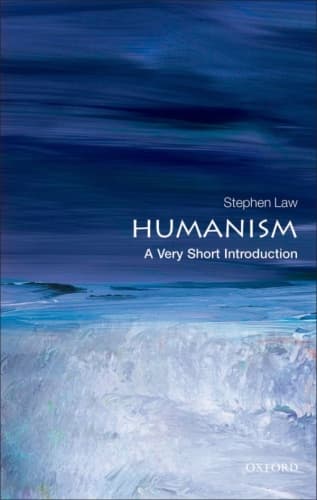
Humanism: A Very Short Introduction
الإنسانية: مقدمة قصيرة جداً
Humanisme : Une très brève introduction
Editorial summary
Stephen Law's "Humanism: A Very Short Introduction" presents a comprehensive examination of humanism as a philosophical worldview that offers a substantive alternative to theistic frameworks. The work systematically articulates how humanism functions as a complete ethical and existential system without recourse to divine authority or supernatural beliefs.
Law structures his analysis by first establishing humanism's core commitments: the primacy of reason and evidence in forming beliefs, the inherent worth and dignity of human beings, and the possibility of meaningful existence without religious foundations. He traces humanism's intellectual genealogy through Enlightenment thought, demonstrating how figures like Voltaire, Hume, and Kant contributed to developing a coherent non-theistic worldview. The text carefully distinguishes between secular humanism and religious humanism, clarifying that while some humanists maintain nominal religious affiliations, the movement's essential character remains naturalistic and non-theistic.
The work engages directly with theistic challenges to humanism, particularly addressing the claim that morality requires divine grounding. Law argues that ethical values emerge from human nature and rational reflection rather than divine commands, defending a naturalistic account of moral knowledge. He examines how humanists derive meaning and purpose without transcendent sources, emphasizing human creativity, relationships, and the pursuit of knowledge as sufficient foundations for fulfilling lives.
Law addresses contemporary criticisms of humanism, including charges of naive optimism about human nature and inability to address existential anxieties that religion purportedly resolves. He acknowledges humanity's capacity for both good and evil while maintaining that reason and compassion, properly cultivated, provide better guides than religious dogma. The text explores humanism's practical implications for education, politics, and social policy, demonstrating how humanist principles translate into concrete positions on church-state separation, science education, and bioethics.
The monograph's significance lies in its clear articulation of humanism as a positive worldview rather than merely the absence of religious belief. Law shows how humanism offers robust answers to fundamental questions about knowledge, ethics, meaning, and human flourishing without invoking supernatural explanations. By engaging seriously with religious critiques while defending naturalistic alternatives, the work contributes to ongoing debates about whether human existence requires theistic foundations. Law's accessible yet rigorous approach makes humanism's challenge to religious worldviews explicit, presenting it as a comprehensive life stance that competes directly with theistic options for addressing ultimate concerns.
Argument formulations engaged
Related works
Law, Stephen (2011). Humanism: A Very Short Introduction. Oxford University Press.
@book{humanism-a-very-short-introduction-2011,
  author    = {Law, Stephen},
  title     = {Humanism: A Very Short Introduction},
  year      = {2011},
  publisher = {Oxford University Press},
  url       = {https://god-database.com/en/works/humanism-a-very-short-introduction-2011}
}